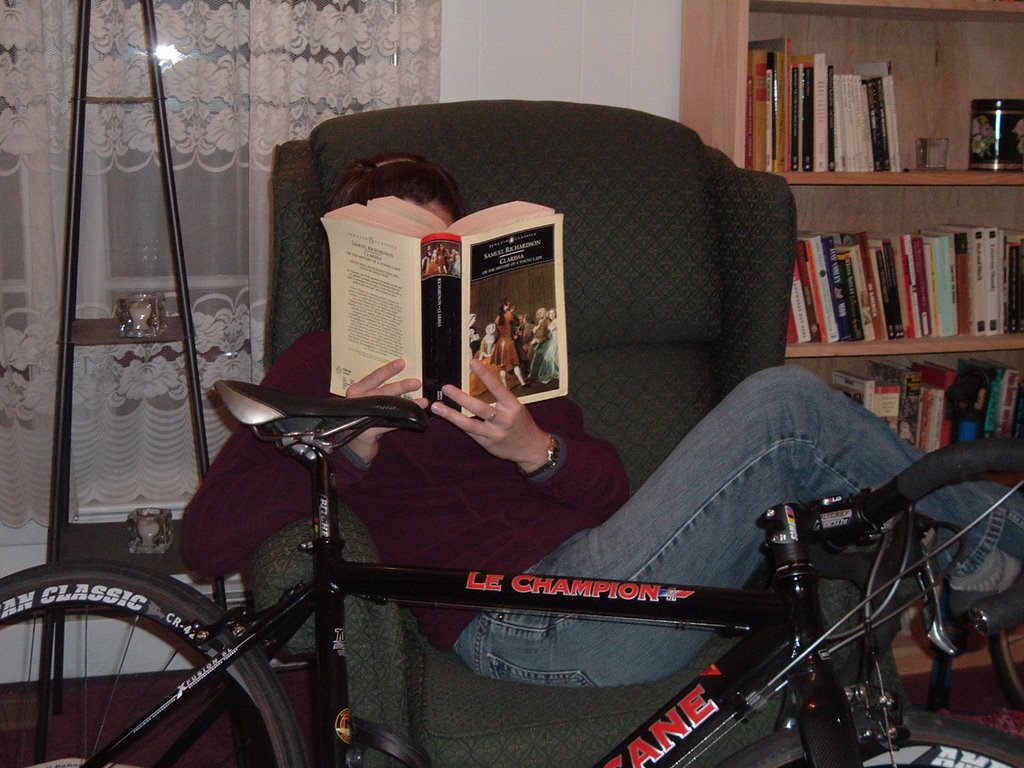
But I did want to write that I’m loving the book. I won’t give any details of my reaction until June 30, when the Slaves of Golconda are doing their book discussion, but if you are participating in the discussion and haven’t begun the book yet, I think you are in for a treat. And if you aren’t part of the group, there’s still time! Anyone can join, and it’s a short book. All you have to do is post a response to the book on June 30th on your blog, and then head over to Metaxu Café and join the discussion on the forums there (and if you don't have a blog, just join us for the forum discussion).
I’ve read about 90 of its 150 pages, and am tempted to read it over again immediately, just to savor it a little more. And it’s such a fast read, I could do it easily. I’ve never done an immediate re-reading before, except when working on an essay for a class, but I’ve liked it when I’ve heard people say they loved a book so much that when they finished the last page, they immediately turned back to page one and started all over again. Sometimes you just can’t bear to leave the world of a novel behind. And since The Prime of Miss Jean Brodie is so short, I don’t have that much time to spend in its world before it ends, unless I do read it twice. Have any of you ever done such a thing, purely for fun?
The Prime of Miss Jean Brodie is tempting me to do something else I’ve never done: set out to read all the works of a particular author, maybe even including books about the author as well as by the author. Muriel Spark would be a good candidate for such an endeavor, I think – she has a lot of novels, but they tend to be slim, and it would be fun to see if and how they change over the decades. Susan, from Pages Turned, has embarked on just such a project, reading through the works of Rebecca West. This sounds awfully interesting (and I’ve never read Rebecca West! Another one for the TBR pile).
I’ve never been that orderly and dedicated a reader, though. I think I’m the type who gets excited about such a project at the beginning, but fairly quickly comes to feel hemmed in by it. And there’s the problem of knowing that you’ll be reading what, at least according to the critics and biographers, are some of the author’s weak books or failures. I don’t feel that level of dedication to most authors, to read everything they wrote, regardless of critical reputation or general readerly consensus.
But wouldn’t it be great fun to be able to say I loved Muriel Spark so much I set out to read everything she wrote?
Today I'm also hanging out over here at Ella's great blog Box of Books -- stop by and say hi!
Thursday, June 22, 2006
Not a post on The Prime of Miss Jean Brodie

Wednesday, June 21, 2006
Race report
One of the things I love about riding my bike and walking in the woods and going backpacking is that I just don’t know what is going to happen to me. I’m not much of a risk-taker, but I do like putting myself outside just to see what happens. Sometimes it’s breathtaking, sometimes it’s difficult, sometimes it’s boring, sometimes it’s dangerous. Always it’s worthwhile.
Anyway, Tuesday evening, my race night, the Hobgoblin and I rode out to the race course under threatening clouds, and before we’d arrived, we started to feel raindrops. Soon, it was a downpour, with thunder and lightning all around us. The two of us and a dozen or so other cyclists tried to take shelter under a little tent where race registration was held, but it didn’t work: the rain, slanting sideways, soaked me anyway. We had fun though, huddling under the little tent, half frightened, half thrilled by the lightning, and in about 15 minutes the rain passed. We got back on our bikes and continued warming up, although with wet uniforms and on wet pavement.
And I had a great race. It was my longest yet, at just under an hour, and I stayed with the pack the whole time, right up to the finish line. I even finished ahead of quite a few of the guys. The hardest part of the course is a hill, not that long, but just long enough to cause me to struggle, and since the course is just under a mile, during that hour, I rode up it again and again – 30 times in fact. Sometimes I found myself falling back a bit on that hill, but always I was able to catch up and stay with the main group.
Before the race began, the guy in charge gave us a little lecture about bike etiquette, how we should be “ambassadors” for cycling, to give cycling a good name. We might say hello to people mowing their lawns as we pass them, and we should make sure we greet other riders. And, of course, we should always obey the traffic rules. The implication of this lecture is that cyclists can be rude – otherwise there would be no reason to lecture us – but the feeling I got from it and from the response is that most cyclists really want to promote their sport, get other people involved in it, make sure it has a good reputation. This is one of the benefits of being involved in a sport that’s fairly small – the people are often very welcoming and friendly. Cyclists want to have other people involved, to create a healthy level of competition. This is certainly true for female cyclists: there sometimes aren’t enough women to have a decent-sized pack for a race, so the more women involved the better. Yes, those other women are competitors, but without competitors, a rider doesn’t improve. Other riders aren’t merely your competitors: they are the people you need to make yourself better.
During the race, there was a rider who kept helping me out; he should have been in the “A” race – the fast race, but for some reason, he was riding with the “B” riders, including me. He came up beside me at one point and said that it’s easier to ride up front in the pack, which I acknowledged to be true – riders at the front tend to ride more smoothly and at a consistent pace, while at the back, people keep “yo-yo-ing,” or speeding up and slowing down and speeding up and slowing down, over and over. But if you’re a beginning racer like me, it’s very hard to stay up at the front. So this guy offered to pull me up to the front; he motioned for me to jump on his wheel – to ride right behind it and draft him – and then he rode around the pack, leading me up to the front. Then he motioned at another rider’s wheel I was supposed to draft on. Unfortunately, I kept falling back, so a couple times more he led me up to the front. He seemed to have a lot of fun doing this. At one point at the bottom of the hill when I started to fall behind the pack, I felt a hand on my back, which I’m positive belonged to the same guy, giving me a push up the hill, helping me to keep up. Later, again at the bottom of the hill, he said, “now don’t make me push you up the hill again!” and so I pushed hard and kept up with the pack.
I looked around for him afterward, but couldn’t find him to thank him. Maybe next week. If I were a stronger, more experienced rider, I wouldn’t want such help, but as it is, I’m pleased. I can’t help but like it that there are people out there taking an interest in how I do, wanting to help me, and obviously getting some fun out of doing it.
I know that there are cyclists who are jerks, who are hyper-competitive, who only care about winning and don’t care what they do to win, but I’ve haven’t been meeting those people. Instead, I’ve been meeting people who love the sport and want others to love it too, who love just being out on the race course and a part of the pack, and who want to help out new riders.
Tuesday, June 20, 2006
On the 18C novel
In yesterday’s comments, Danielle, who, I’m coming to find, is a marvelous asker of questions, asked where to begin with the eighteenth-century novel.
Well. Such a question couldn’t make me happier because it gives me a chance to talk about one of my reading obsessions.
So – I won’t say where to start, but I’ll talk a bit about books I think are important in understanding the period and books that are fun to read. Sometimes these overlap, sometimes they don’t. When it comes to the 18C, it's hard for me to tell what you would find a fun read. Any of them would be great places to begin.
True to yesterday’s post about categories, I’d recommend Aphra Behn’s novel Oroonoko, which isn’t in the 18C at all (1688) – it has the virtue of being short (which many, many 18C novels most decidedly are not), and fascinating in terms of genre – it’s sort of a novel, sort of a romance, sort of both – and connected with historical events. It has love, violence, travel, sweeping historical forces, all in 100 pages or so.
And there’s Defoe, who shouldn’t be missed. I happen to love Robinson Crusoe, and it’s a great book for understanding class, colonialism, capitalism, Puritanism, individualism, you name it, it’s in there. Well, there’s no sex. But there’s sex in his other books, which are also great places to begin: Moll Flanders and Roxana. Those give you great female protagonists trying to survive with their intelligence and wit.
As for Samuel Richardson, who is most definitely one of the most important novelists of the period, I’d read Pamela. Clarissa is great, but it’s so long it’s daunting. Pamela by no means conforms to any rules of structure and good fictional form we might believe in today, but it is just so great in the way it captures many 18C obsessions: class; sex; marriage; language, letters, and identity; the relationship of writers and readers; women and the body; anxiety over fiction itself.
And if Pamela irritates you, then you simply must read Henry Fielding (read him if you loved Pamela too), who found Pamela so annoying he wrote a parody Shamela, which is hilarious. Then Fielding wrote Joseph Andrews, which is another send-up of Pamela, this time more complicated and developed. The Richardson/Fielding pairing is very useful in understanding 18C writing – they capture two different types of novels, two ways of thinking about writer/reader relationships and what fiction should do, and it’s possible to read Austen’s novels as integrations of that Richardson/Fielding split – Richardson’s psychological interest and Fielding’s satire. Fielding’s best book is Tom Jones, but the Pamela/Shamela/Joseph Andrews story is too interesting to be missed.
I also really enjoyed Charlotte Lennox’s novel The Female Quixote: it’s her version of Cervantes’s story, about a woman who thinks the world is like one of the many French romances she has found in her dead mother’s library. And I loved Samuel Johnson’s short novel/fable Rasselas, about finding happiness. It’s a beautiful book, but sad. It makes no attempt to be realistic, so some people say it’s not a novel, but whatever it is, it tells a wise story.
I absolutely adore Tristram Shandy, which I keep mentioning around here. It’s hard for me to tell how challenging a read it would be for someone not familiar with the period. Some of the jokes might be hard to get. It’s a book about the impossibility of writing the story of one’s life, and it’s a book about sex and impotence, about philosophy and playfulness, about sentiment, but mostly about language – what it can and can’t do. If Tristram Shandy seems a bit daunting, you can try A Sentimental Journey, which has a similar tone and style.
Of course, there’s Evelina, which I’ve posted on before – an excellent place to begin.
And I could go on and on (I won’t) – but I think some of the novels of the late 18C are particularly interesting: Elizabeth Inchbald’s novel A Simple Story, Maria Edgeworth’s Belinda, Ann Radcliffe’s The Italian (for an example of the gothic – and if you think you’d like the gothic, don’t miss Horace Walpole’s Castle of Otranto or Matthew Lewis’s The Monk – these two are among the most bizarre books you’ll ever read).
Does anyone want to add a favorite?
Monday, June 19, 2006
More musings on categories and the novel and your comments
Thanks to everyone who commented on my post about novels and literary periods; you all wrote great stuff, and I’d like to quote you liberally.
One of the things that amuses me about eighteenth-century studies is that academics like to call the period the “long eighteenth century,” which usually means something like 1660-1830, although people will quibble about the dates. So the eighteenth “century” becomes 170 years long. 1660 makes a lot of sense to me as a beginning date, since that year saw the restoration of the monarchy after Cromwell and the Civil War in Britain, and that year the theaters opened again. You can pinpoint some significant changes in literature and culture that happened rapidly, which makes literary categorization easier. But, of course, seventeenth-century scholars will work in the years after 1660, and I’m sure some people don’t like eighteenth-century scholars’ way of taking over those decades before the actual eighteenth century starts.
And the problem with ending the “long eighteenth century” at 1830 or thereabouts is the whole Romantic period – where does that go? I’ve heard the Romantic period defined as beginning in either 1789 (French Revolution) or 1798 (publication of Lyrical Ballads) and ending somewhere in the 1830s. I think what happens is that more traditionally-minded scholars work on writers we think of as Romantic – Wordsworth, Coleridge, etc. – and eighteenth-century scholars work on those who don’t seem to fit the Romantic paradigm – Austen, Burney, Godwin, Wollstonecraft, although these people have characteristics that might mark them as “Romantic” as well. And then there are a lot of scholars who label themselves as Romanticists or eighteenth-century scholars but end up writing on a lot of the same people. In terms of what specialization they affiliate themselves with, it could have gone either way. So people sort it out and make do with a little bit of confusion.
Here’s what litlove has to say about her experience with literary categories:… at my university (which is considered very old fashioned) we teach literature in centuries. It's always a messy distinction because inevitably they blur together at the edges, and when we decided to split the C20th into two halves it took us a series of five meetings to agree where the borderline should fall!
To which I say, five meetings? Were there any fistfights?
But that’s all stuff that concerns academics. How scholars think about literary periods makes some interesting stories (i.e. the confusion over the Romantic period has a lot to do with opening up the canon so that scholars write on novelists and playwrights from the period in addition to the poets, who fit the definition of Romantic [if there is such a thing as an agreed-upon definition of “Romantic”] better [because, after all, the definition was made for them]), but I’m also interested in how these categories can help (or not) the general reader who doesn’t need to stake any claim on a time period or take on a label of specialist in such-and-such, and who doesn’t need to divide up the curriculum in centuries or some other time marker.
You all had some great stuff to say about this:As far as designating literary periods goes, I personally find them useful to a degree. As long as they are used to describe the predominating mode of writing at the time it is beneficial, but as soon as they are turned into something less permeable or used to purposely exclude, then I think it does a disservice to authors and readers. [Stefanie]
I know things are not always easily and neatly categorized, but I sort of like to do so--it is interesting for someone like me not familiar with these periods to see how the novel evolved. [Danielle]
I find the idea of quantifiable differences between 18th and 19th century novels an interesting one. But, thinking about it further, I don't think distinctions can be made easily. Literary tropes are so amorphous, and literary influence so widespread that I can only begin to speak about it in terms of changed and changing social environments and mores. [Victoria]
But each and every book exists as the still centre of a small tornado of influences and intentions, and I guess it's good practice to remain to true to those rather than the overarching themes of the century. [litlove]
And I agree with it all. Litlove's metaphor of the tornado is particularly pleasing and apt, and Victoria's word "quantifiable," used to think about differences in time periods, raises interesting questions about the type and degree of difference. I'd love to know about quantifiable differences. Danielle points out the usefulness of categories, while Stefanie rightly argues that categories should be permeable. The categories are useful, and they are deceptive. Establishing categories and understanding the ones that scholars and readers have worked with in the past seems most useful for someone just starting to study literature as a student or someone who is a general reader (not aiming to make a living out of it in some way) and who wants to understand what he or she is reading a bit better. Understanding the eighteenth-century helps tremendously when trying to understand Jane Austen, for example. And I think knowing something about modernism can help a reader understand Virginia Woolf. I take great pleasure in this kind of thing because I like order, and I like lists (for example, when the teacher says, “these are the main characteristics of Romanticism. First …”), and I like being able to explain things to people and categories help with this tremendously.
But I also get a kick out of breaking down the traditional categories. They are arbitrary. Why end a literary period just because a century ends? In this respect, having a “long eighteenth century” that overlaps with and completely subsumes Romanticism, although Romanticism continues to exist alongside it, makes a lot of sense. If the literature isn’t neatly divided itself, then why should the categories be? Why can’t we have eighteenth-century scholars who specialize in Jane Austen and Romanticists who specialize in Jane Austen? (Well, okay, the problem is they go to different academic conferences.) And I’m only talking about dates here. There’s also the question of nations. I’ve been writing about the eighteenth century, specifically the eighteenth century in Britain. But what about the period in America? In France? Studying literature from only one country can lead to a pretty narrow and inaccurate view. To understand the Enlightenment period in Britain, it helps a lot to know what is happening in France. To get early American literature, you have to know something about writing in England.
For the general reader, while the categories are useful, I think it’s best to learn about categories while keeping in mind that they are flawed – to learn about them but not to believe in them fully or trust them. So if you want to study postmodernism, please do, and have fun, but remember that Tristram Shandy is one of the best examples of postmodernism there is.
And I haven’t even gotten to the question of the differences between 18C and 19C novels. That’ll be for another day.
Sunday, June 18, 2006
For KB
Yesterday I went to a memorial service for a work colleague and cycling friend who died unexpectedly. He was only 46. The following passage was read at the service and my friend had it up on his website: Go placidly amid the noise and haste, and remember what peace there may be in silence. As far as possible, without surrender, be on good terms with all persons. Speak your truth quietly and clearly, and listen to others, even the dull and ignorant; they too have their story. Avoid loud and aggressive persons; they are vexations to the spirit. With all its sham, drudgery and broken dreams, it is still a beautiful world. Be careful. Strive to be happy.
If you compare yourself with others, you may become vain and bitter, for always there will be greater and lesser persons than yourself.
Enjoy your achievements as well as your plans. Keep interested in your career, however humble; it is a real possession in the changing fortunes of time.
Exercise caution in your business affairs; the world is full of trickery. But let this not blind you to what virtue there is: many persons strive for high ideals, and everywhere life is full of heroism.
Be yourself. Especially do not feign affection. Neither be cynical about love, for in the face of all aridity and disenchantment it is
perennial as the grass.
Take kindly the counsel of the years, gracefully surrendering the things of youth.
Nurture strength of spirit to shield you in sudden misfortune. But do not distress yourself with imaginings. Many fears are born of fatigue and loneliness. Beyond a wholesome discipline, be gentle with yourself.
You are a child of the universe, no less than the trees and the stars; you have a right to be here.
And whether or not it is clear to you, no doubt the universe is unfolding as it should. Therefore, be at peace with God, whatever you conceive him to be, and whatever your labors and aspirations, in the noisy confusion of life, keep peace with your soul.
Saturday, June 17, 2006
Musings on your comments
You all had some excellent questions and comments on my Evelina post, and I’ve been thinking about them a lot over the last couple days. One of the things I find most interesting about eighteenth-century literature, particularly the novel, and particularly novels written by women, is the way they explore what critics like to call the “literary marketplace” – the relationship of writers, booksellers, publishers, and readers. This stuff gets explored in novels that don’t appear to be about the literary marketplace at all, and Evelina is one example. Selling books to strangers and working with publishers and booksellers to do so is new in the eighteenth century; writers are no longer writing for patrons and getting support from them, but are figuring out ways to make money off writing by dealing with the public. And this is cause for a lot of anxiety. It’s particularly tough for women, because publishing involves entering the public sphere, engaging in public discourse, which wasn’t quite “ladylike.”
Victoria, in her comment on my Evelina post, brings up the issue of public/private worlds, and how the epistolary form bridges the gap between the those worlds in interesting ways – letters being private, but publishing them a very public act. Women, although they did sometimes have a place in public spheres, were most often relegated to the domestic and private world, and entering the public sphere was fraught with anxiety. This problem becomes part of the plot of Evelina when Evelina’s letters are in danger of getting lost and getting into the hands of the wrong reader. Her letters, coming straight out of the most private of private places – her closet (meaning a small room like a study or sitting room) or her bedroom – get sent out of the house and into the public world, and from there they can be intercepted or lost. This happens to Evelina, with some consequences that keep the plot going for quite a few pages. And this isn’t so different from what Burney herself might experience: her collection of letters, the novel itself, will, upon publication, get sent out into the world where she has no control over what will happen to them. They will be bought by strangers, reviewed by strangers, or, perhaps worse, ignored by strangers, interpreted by strangers, and there is absolutely nothing she can do about it, except write a dedication to book reviewers, which, of course, they can ignore or misinterpret.
Stefanie asked why the epistolary form is so popular among eighteenth-century writers, and I think part of it is because of the enormous influence Richardson had on writers – he was so successful with the form that others followed – and part of it is technical – letters provide a kind of immediacy in a first-person voice that could create narrative tension. Other first person narratives from the eighteenth century, such as Defoe’s, were written at the end of the narrator’s life, from the perspective of having been through everything all ready, so compared to that kind of summing-up, letters are immediate and in the moment.
Another part of the reason letters were so popular though, I’m thinking, is because of the way they let writers explore problems of how identity is formed in the tension between the public and private. Evelina is essentially a nobody – with no name, no family, no history – and by writing her letters she is writing herself into existence. The same is true for Richardson’s novel Pamela: Pamela’s letters and journals let her write her way into a much better social position than she could have originally expected. And Burney herself uses letters to write her own way into the position of famous and successful novelist. She does so only tentatively, however; she published the novel anonymously, and so was establishing her identity as a novelist by sending her work out to the public but at the same time keeping her name private. This provides her with some degree of protection, a space in which to do something dangerous and brave.
Others of you asked about differences between eighteenth- and nineteenth-century novels, and I’m probably going to think about that question some more because it’s really interesting to me – both the question itself and the larger questions that arise from it about the value of designating literary periods and categories. I mean, is such a question useful, or is another formulation of it more helpful? Thoughts anyone?
Friday, June 16, 2006
Poetry Friday: more Jane Hirschfield
Here’s a poem for book lovers, from Given Sugar, Given Salt:Each Day I Choose From Among the Steepening Reminders
I love the way Hirschfield slowly builds up to her point here. At first we don’t know what the “steepening reminders” are; they could be the accumulated reminders of anything she has wanted to do but has left undone. And then in the fourth line we learn she’s talking, in part, about books, all the things she wants to read. We imagine a stack of unread books the speaker looks through longingly, aware of their possibilities. The severe and perfect “phrases” of the fifth line rise up before her also like that stack of books, and the list of names adds to the feeling of weight and potential. But the end of the poem moves back out to a larger view; books, after all, will remain, are fixed and frozen, are waiting there for her when she is ready. What is not, is life itself, the elusive “thing” of the last line, before it is captured and turned into words.
Each day I choose
From among the steepening reminders
Of all I have failed to finish, failed to begin.
I open a right-hand cover and read the last page.
Phrases severe and perfect rise before me,
Wrung from every extremity of joy and sleek-limbed loss.
Borges, Sinyavsky, Hadewijch, Sappho, Li Po.
More arrive each week, ink sharp as new hunger.
And these are only the books:
The thing already ambered, capable of waiting, turned to words.
As in many of Hirschfield’s poems, I see evidence here of her Buddhism; she has a keen sense of the importance of the present moment, of all there is to be experienced and absorbed, if one would only pay attention. This poem seems to me to be about the weight of things left undone, the failure to begin and finish things, but also about the conscious choices the speaker makes to do what she does. Each day it is a choice, and the opening line emphasizes her determination to make that choice deliberately. She may fail to do many things, but what she does, she will do because she wants to, because she has chosen it. The poem seems balanced between a sense of responsibility and possibility; those reminders nag at her, like those books she knows she would love but hasn’t found time for yet, but she also takes pleasure in the new choice there is to be made every day.
Thursday, June 15, 2006
On Evelina
 I am a little more than half way through Evelina at the moment. I have read this book before, for a graduate class; this time it’s purely for fun. And I am enjoying it – it’s a good story, entertainingly told, and it is interesting for what it says about eighteenth-century culture, something I’m always happy to read about.
The book isn’t pure enjoyment though. There are painful parts, particularly when it comes to all the descriptions of how Evelina gets pushed and pulled around by everybody, sometimes made to do things she doesn’t want to do or be with people she doesn’t want to see, and sometimes physically pushed and pulled. Those parts can get hard to take because I want to yell at Evelina and say don’t let them do this to you! Stand up for yourself and just say no!
But the point is that she has very little control over her body and over her future. These two quotations pretty much sum up the situation in the novel, both of them taken from letters to Evelina:The supposed obscurity of your birth and situation, makes you liable to a thousand disagreeable adventures.
AndRemember, my dear Evelina, nothing is so delicate as the reputation of a woman: it is, at once, the most beautiful and the most brittle of all human things.
So, put these two things together, and that’s the plot. Evelina’s “obscurity” comes from the fact that her father refuses to recognize his marriage to her mother, who is dead. Evelina was raised by the Reverend Villars, tutor to Evelina’s grandfather and author of the above quotations. Without recognition from her father, she is illegitimate and hence has no name. Without a place in a family – in the patriarchal order – she is without protection from that order and subject to abuse. She is forever objecting to the designs other people have on her, but she cannot stop them. She cannot control her body or even her name, the made-up last name of Anville:“So I says to the porter, says I, tell his Lordship, says I, one wants to speak to him as comes from one Miss Anville, says I.”
People can take “liberties” with her without any authority whatsoever; with a father or husband to protect her, she is at everyone’s mercy.
“Good God, cried I, “and by what authority did you take such a liberty?”
The story gets started when 17-year-old Evelina leaves her home at Berry Hill to visit a friend, and from there they move on to London. Away from home she is without even the protection of Villars, and in London, she is exposed to public spaces where predatory men await. What we get is a fairly traditional kind of plot, one where the young innocent heads off into the dangerous city, and we get to see the city through the eyes of someone experiencing it for the first time. This offers Burney many possibilities for social satire, of which she takes full advantage. Much of the middle of the novel is consists of visits to the theater, the opera, dances, and other kinds of entertainments, where Burney describes interactions among people of what we would call varying social classes, although “class” wasn’t a term used at the time. We get a description of shopping, which seems to be a new activity, at least to Evelina:We have been a shopping, as Mrs. Mirvan calls it, all this morning, to buy silks, caps, gauzes, and so forth.
Evelina is forced to spend time with people she finds “vulgar” and “ill-bred”; they are of a lower social standing, although without her own black mark of illegitimacy. She is continually shocked at their lapses in good taste. Burney writes about the situation of women sympathetically, but this clearly does not include women of the lower social orders.
The shops are really very entertaining, especially the mercers; there seem to be six or seven men belonging to each shop, and every one took care, by bowing and smirking, to be noticed; we were conducted from one to another, and carried from room to room with so much ceremony, that at first I was almost afraid to follow.
Burney seems to take special pleasure in portraying cultural conflict; some of the “ill-bred” characters fight over and over again about the relative merits of the French and the English, drawing on the traditional national stereotypes. This, as you can imagine, tries Evelina’s delicate sensibilities to no end. Burney also has some fun with physical comedy; in one scene two of the men stage a fake hold-up of a carriage carrying Evelina’s grandmother, Madame Duval, a woman who has annoyed the men by engaging in some of the book’s harshest verbal sparring. She gets dumped in a ditch, her fake curls stolen, her feet tied together, and her dress covered in mud. The men think this is hysterically funny.
The novel is epistolary in form. Most of the letters are written by Evelina to Villars, with a few written back to her. As in Richardson, this technique is rather difficult to believe: Evelina seems able to remember vast amounts of dialogue and seems to have no end of time in which to write everything down. But what I like about the technique is the way we get the story coming from one perspective and shaped specifically for the eyes of another. Motivations then become interesting: why is Evelina telling the story in this particular way?
The strongest impression I get from the book, though, is of Evelina’s vulnerability. While I wish she would assert herself as I would expect a contemporary woman to do, circumstances and social expectations dictate that she cannot. It’s painful to see her tossed about, and her frustration and anger are palpable. The book is a powerful testament to what it means to be enmeshed in a patriarchal culture – and what it’s like to live on its edges.
Wednesday, June 14, 2006
Race report; or, isn't it great when we all help each other out?
Last night I rode in the weekly Tuesday night bike race, and once again I finished, which, for me at this point, is all I hope for.
The race felt like it was more about people working together than it was about competition, although competition was there too. This happened in two ways, the first I didn’t find out about until after the race. A group of 9 riders broke away from the pack – which had probably about 45 riders total – fairly early on and stayed ahead for the rest of the race. When a group goes off the front, leaving the main pack behind, riders in the main pack who have team members in the break-away group will try to keep the main pack riding slowly, so the break-away group will stay out front and therefore have a better chance of winning. Since one of my teammates was in the break-away group, other members of my team worked hard to keep everyone in the slower group back. If anyone tried to catch up with the front group, they got in front of that rider and slowed him or her down. They were sacrificing their own chance of winning so that the faster teammate could win. I wasn’t aware of this, partly because I was pretty far in the back and couldn’t see the tactics and partly because I’m working so hard, I don’t pay attention to anyone else.
And this is how cycling is supposed to work. I didn’t realize for a long time what a team sport it is. It’s not at all like running where, as far as I know, everyone is on their own and you just run as fast as you can. Instead, the team is supposed to work together, with the drafting of course, but also by designating one person as the rider everyone else will support, with everyone else sacrificing themselves if necessary.
After the race, some of my teammates were standing around talking, all excited about working together to help someone else out. This is funny, in a very cool kind of way. I mean, each of them was basically saying, “I played a supporting, subordinate role in this race, and I had a great time doing it. Isn’t it fun to make sacrifices for other riders? It’s not really me that matters, after all, it’s the team. Winning isn't everything.” It’s not often a woman gets to sit around and listen to a group of men talk this way.
And you know what they call the guys who help the top teammate by keeping the main pack in line so the fast guy can get out front and win?
Domestiques.
So my teammates were all excited about being domestiques. Women, if this doesn’t get you up on your bike and out to join your local cycling club, I don’t know what will. This is also the sport where you get to see beautifully-muscled men wearing pink.
The other thing that happened is that one of the two other women riding in this group – neither of whom I’ve actually met – spoke to me a couple times, encouraging me to keep going. One time this happened when we were riding up the short hill on the way to the start/finish line; I was slowing down a bit, and she came alongside me and told me to keep pushing, that the last thing I want to do is fall back on the hill. I’d have a chance to rest at the top. So I pushed on. Later on she pulled up beside me, told me I was doing great, and explained that she’s gotten dropped on hills many times and has learned that you have to push as hard as you possibly can on the uphill and recover later. That’s the only way to keep up. I thanked her, and tried to find her after the race to talk a bit more, but she didn’t stick around.
So we were competing, but the feeling was one of helping each other out. I was pleased at the gender solidarity – that woman rider, whoever she was, was making a point of encouraging me – a beginning, struggling woman rider, perhaps with some potential. And I love the team solidarity as well. I don’t know how often the teams actually work together like they are supposed to – I’m sure it happens much more often in professional cycling than on this amateur level – but it sure sounded great to hear people talking about it later. I can’t assist anyone on my team right now, but they are helping me out a lot, and maybe someday I can return the favor.
For another perspective on the race from the other reader/rider/writer who lives in my house, check this out. Because I know all you bookworms can’t get enough of this racing stuff.
Tomorrow, back to books: an update on my Evelina reading.
Tuesday, June 13, 2006
A question from the comments
Danielle has asked an excellent question:how you can tell if a novel is experimental or post modern?
It's so excellent a question I hesitate to answer it all on my own. Here is my lame attempt from the comments:I think the term "experimental" can apply to a writer from any time period -- Tristram Shandy from the 18C is a good example. The term postmodern refers to works roughly from the end of WWII to the present, but it only refers to certain types of works. I don't know that I have good definitions, but I would call something experimental if it's setting out to change the "rules," like Woolf does, like Gertrude Stein, Nabokov, Barnes. These people are messing around with the "realist" novel. But it's not easy to define, because many, many writers try to do new things. It's a matter of degree, I suppose. As for postmodern, that refers to writers who play around with language and form, who draw attention to the text as a text rather than trying to create a "realistic" portrait of the world, who question the idea of a coherent self and identity (and therefore may not have characters of the traditional sort), who question the idea of any absolute truth. You could call Nabokov, Thomas Pynchon, Don Delillo, John Barth, and David Foster Wallace postmodernist writers. This is the sort of thing critics will argue over for hours. If you come across something that doesn't have a traditionally realist narrative and characters, it's probably experimental in some way, and if it's written between 1945 and the present, you could probably call it postmodern.
Does anyone have a less lame answer? I mean, even to call Tristram Shandy experimental seems to be a bit of a problem, since it was published in a time when the "rules" for novels, such as they are, are only being formed. So can one experiment with something that isn't fully defined and formed yet? (I know, I know, the novel is never fully defined and formed, because it's constantly changing, but I think you know what I mean.) And, to make things more complex, people sometimes will call Tristram Shandy postmodern. Now that clearly doesn't make sense since the term postmodern only makes sense if it refers to something, well, "post" the "modern" period. But Tristram Shandy sure does seem remarkably postmodern for all that. If anyone wants to add more characteristics of the postmodern novel, or if anyone wants to quibble with what I've got, by all means do.
By the way, the movie "adaption" of Tristram Shandy was an awful lot of fun. I highly recommend it. You could even call it experimental. Maybe.
Monday, June 12, 2006
Has blogging about books changed how you read?
I’m curious what you book bloggers out there have experienced. Sandra from Book World got me interested in this question when she wrote:I realise that the tyranny of blogging and of feeling that I have to deliver something 'new' has meant that in the 18 months of this blog's existence, only one of the books I've read has been a re-read. That's not at all typical of my pre-blog reading profile ….
Has anyone else felt that blogging can be tyrannical? Having begun blogging in mid-March of this year, I haven’t been doing it long enough to know, really. My reading habits have changed, but I can’t tell yet if those changes will be permanent or if I’m going through a temporary stage, doing some experimenting I’ll give up eventually. And right now I’m having so much fun blogging that it’s hard to imagine the negatives that come with it, but I’m sure they are there to be discovered.
Blogging has made me a more careful reader, at least to the extent that I take the time to post on quotations I’ve found meaningful and to develop my responses to books enough to write them down coherently. This is probably one of the best things about book blogging. (I’m imagining getting comments and taking part in conversations would be another for a lot of people). Now I have a record of quotations and my thoughts about books. Perhaps I’ll remember better what I read, or at least I’ll be better able to remember the things I’ve pulled out of my reading to write about. Writing about what I think makes me have better thoughts.
By reading blogs, I’m also hearing about more books than I did before. Well, maybe I’m paying attention to what I hear a bit more. There are tons of places to get information about books, and I’ve always heard and read a lot about the books out there, but I’m coming to think that book blog sites are among the best sources of information because I can come to know and trust the writer’s opinions. There’s context there, a much more complex one than in a regular book review. Yes, I pretty much know what to expect from, say, the New York Review of Books, and that provides a context in which I can judge how to respond to a review, and there are some reviewers who publish so frequently I get to know their opinions and tastes, but in a book blog, I get a much stronger sense of the writer and so can trust the recommendations that much more confidently.
I mark up my books more than I used to, and I catch myself thinking of blog posts as I read, looking around for good quotations and trying to decide if a particular idea or scene is worth turning into a post.
My to-be-read list is growing rapidly. I’ve had such a list for a while, but it tended to be fairly short; I’d only put books on there that I was highly likely to read at some point in the near future. But now it’s growing, partly because I’ve made a conscious decision to make it more comprehensive, and partly because I’m coming across so many more things I’d really, really like to read.
Shortly after beginning the blog, I started reading more than one or two things at once after I read about other people’s multiple-book-reading habits. It sounded like such a good way to read in different genres and to read difficult things I might not want to spend hours with in one stretch. This makes it easier for me to read poetry and difficult nonfiction.
I wonder, as I go on, if the fact that I’m blogging about reading will affect my choice of books. I can see why blogging might lead to less re-reading, as Sandra points out, since I wouldn’t want to bore you with another review of the same book I read a year ago. On the other hand, though, if every reading of the same book is different – if I read Evelina differently now than I did in a graduate school class years back – then blogging about a re-reading might be interesting, for comparison’s sake. Sometimes I’m tempted to re-read pre-blog books I really love, just so I can have the fun of blogging about them.
I can imagine wanting to read the things that other book bloggers are reading in order to be a part of the conversation, but also NOT wanting to read what other book bloggers are reading, so that I’m not talking about the same thing everyone else is. The best thing to do, of course, is to try not to let these factors influence me and just pick books that sound appealing for other reasons, but I can see that I might be affected by what other bloggers are doing anyway.
I also wonder if and when the regular blogging gets tiresome. I haven’t felt anything but pleasure in it so far, but I would expect blogging over a long period could sometimes feel like a chore, like tyranny.
I am sometimes torn between the pleasure of reading books and the pleasure of reading book blogs. This may be one of the more difficult things of being a book blogger: that there are so many good book blogs to read and all those hundreds and thousands of blogs can be a distraction from what is the main point, really – reading books. I’m not sure if I read faster or slower, more or less than before I began blogging. Sometimes I want to read faster so I can be sure I have something to post about. Other times I have so many things to post about I want to read slower, so I won’t get even more ideas, and I don’t want to post too often and overwhelm readers – and myself. Does anyone worry that they won’t have anything to write about?
So, if you have a tale to tell about how blogging has changed your reading, I’m curious to hear it.
Sunday, June 11, 2006
Lists
I have some lists for today; the first one is of the books you all recommended when I asked for books that ... I'm not sure what, exactly, except I asked for the kind of books I would like. Let's call them books about books or about people who love books and books that are very often experimental and self-reflexively about reading and writing and that have a lot of passion too, or are just plain quirky and fun or quirky and serious, or simply books that are likely to make me happy.
On my original list was:
Julian Barnes, Flaubert's Parrot
Vladimir Nabokov, Pale Fire
Mary McCarthy, Memories of a Catholic Girlhood
Dave Eggers, A Heartbreaking Work of Staggering Genius
Nicholsen Baker, U and I
And I left off one of my favorite books ever, which I can't believe I forgot:
Laurence Sterne, Tristram ShandySo here were your recommendations:
A.S. Byatt, Possession and The Biographer’s TaleNot a bad list, is it? If you have more suggestions, please let me know; I'd love to add to the list.
Jaspar Fforde, the Thursday Next books
Thomas Wharton, The Logogryph
Muriel Spark, The Comforters
Jorge Luis Borges, Labyrinths
Anne Fadiman, Ex Libris
Primo Levi, The Periodic Table
Italo Calvino, If on a winter’s night a traveler
Christopher Moore, Lamb: The Gospel According to Biff
Kate Christensen. The Epicure’s Lament
Ursula Hegi, Intrusions
Peter Rushforth, Pinkerton’s Sister
David Lodge, Small World and Changing Places
And then, one more list. I recently got some money as a gift and, no surprise, spent it on books. Here's what I got. That the list below and the list above don't overlap at all doesn't mean I wasn't happy with your recommendations; it often takes me ten years or so to get around things on my to-be-read list, but they are there, ready for the right time.
Curtis Sittenfeld, Prep -- enough people recommended this one, including a favorite professor of mine, and I'm sure I'll enjoy it.
Jose Saramago, Blindness -- everyone seems to love him, so it's definitely time I give him a try.
Orhan Pamuk, Snow -- same as above
Elaine Scarry, On Beauty and Being Just -- I've read an essay or two of hers and loved them, and this book looks very interesting. I'd also like to look at her book The Body in Pain.
Brian Greene, The Fabric of the Cosmos -- time for some more science.
Frances Burney, Journals and Letters -- time to find out more about Burney's life. This one is in the mail right now.
I'll be busy, won't I?
Saturday, June 10, 2006
Dedications
Let not the anxious solicitude with which I recommend myself to your notice, expose me to your derision. Remember, Gentlemen, you were all young writers once, and the most experienced veteran of your corps, may, by recollecting his first publication, renovate his first terrors, and learn to allow for mine.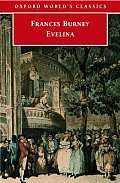 After my recent post about book reviews and reviewers, I was interested to read Frances Burney's thoughts about reviewing in the dedication to her 1778 novel Evelina. For background, Burney published the novel anonymously and was very nervous about getting found out and worried about what kind of reviews she would get. As she wrote the novel, she kept it a secret from her father and worried about what his response would be when he discovered it. In fact, she, with the help of her brother, found a publisher for it before it was finished and only then, very nervously, did she tell her father. She was battling against her own nerves, the uncertain status of women writers at the time (hence the anonymous publication, quite common for women), and her fear of her father.
She dedicates the book "to the authors of the Monthly and Critical Reviews," taking the reviewers on directly, and starts off:Gentlemen, The liberty which I take in addressing to You the trifling production of a few idle hours, will, doubtless, move your wonder, and, probably, your contempt.
Now, I don't think we can take this at face value -- it was tradition to write dedications that were more about the author's rhetorical positioning than about saying anything sincere, and modesty was a familiar -- and often feigned -- trope. But as Burney moves through the dedication, her attitude towards reviewing gets interesting. She claims the reviewers as her "patrons," since she has no aristocratic patron of the traditional type, the one to whom the dedication is usually made:to whom can I so properly apply for patronage, as to those who publicly profess themselves Inspectors of all literary performances?
She calls on their "protection," but then says:The language of adulation, and the incense of flattery, though the natural inheritance, and constant resource, from time immemorial, of the Dedicator, to me offer nothing but the wistful regret that I dare not invoke their aid. Sinister views would be imputed to all I could say; since, thus situated, to extol your judgment, would seem the effect of art, and to celebrate your impartiality, be attributed to suspecting it.
So what is a dedicator supposed to do, right? Flattery is traditionally a part of the dedication, but if she flatters the reviewers, she'll be seen as angling for a good review rather than saying anything truthful. But, of course, in saying all this, she IS angling for a good review -- she's flattering them while saying she's not. She goes on:As magistrates of the press, and Censors for the Public, -- to which you are bound by the sacred ties of integrity to exert the most spirited impartiality, and to which your suffrages should carry the marks of pure, dauntless, irrefragable truth, -- to appeal for your MERCY, were to solicit your dishonour; and therefore, -- though 'tis sweeter than frankincense, -- more grateful to the senses than all the odorous perfumes of Arabia, -- and though "it droppeth like the gentle rain from heaven upon the place beneath," I court it not! to your Justice alone I am entitled, and by that I must abide. Your engagements are not to the supplicating author, but to the candid public, which will not fail to crave "The penalty and forfeit of your bond."
She is saying, in effect, even though I really, really want you to have mercy on me and write me a good review -- it would be a heavenly gift --and notice how I'm flattering you as I say this, oh wonderfully impartial magistrates of public opinion, I won't ask for one. And notice how eloquently I'm not asking you for a good review, since really, although I won't say this directly to you, I'm communicating a bit of contempt for reviewers through my over-the-top language in the midst of my compliment-laden sentences. For after all, if it weren't for writers like me, you wouldn't have anything to write about, although, as a first-time author, I depend on you too:
If you have an ounce of heart in you, you'll remember what it's like to be me, you'll think about the person whose work you're critiquing and you'll write with a picture of the anxious young author who loves her book in the back of your mind. After all this, how can you be anything but kind?
Friday, June 09, 2006
Muriel Spark's Aiding and Abetting
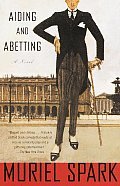 I finished Muriel Spark’s novel Aiding and Abetting recently. I’m reading it for the Slaves of Golconda; they are discussing The Prime of Miss Jean Brodie at the end of June and each of the members is reading one other Spark book, so this was mine. I figured I could post about it now and add my thoughts on the book during the larger discussion, if they are relevant.
This is a very short book – almost short enough to be a novella – at 165 pages with large print and margins. But so much happens in it, and Spark manages to give you lots of characters and action without creating the feeling that things are rushed and undeveloped.
How can you not like a main character with the name Hildegard Wolf? She is a wonderful character: smart, powerful, mysterious. And also deceitful. She is a psychiatrist with some unusual methods: she spends the first few sessions telling stories to the patient instead of the other way around. The patients love this, for the most part, and she is very successful. She has always had healing powers. In an earlier episode in her life she was a fake “holy stigmatic”; every month she would take menstrual blood and smear it on at least one of the places Jesus was wounded, hands, feet, or side, and people flocked to her for healing. People sent her money in return for her “miracles,” and this is how she survives until she is exposed as a fraud and has to flee. This, of course, makes one wonder about the legitimacy of her status as psychiatrist. She insists that she really did heal some people as a stigmatic, and she really does seem to help her patients, so the book becomes a meditation on the power of belief. Is she so bad for having helped people, even if she did so under false pretenses? All this, by the way, is backstory, sketched in early on before the action begins.
The other part of the story involves two men, both Hildegard’s patients, each of whom claims to be “Lucky Lucan,” an Earl who killed his daughter’s nanny in a failed attempt to kill his wife and then went into hiding for over 25 years. Hildegard, with the help of some of the novel’s other characters, tries to figure out which one is the murderer while keeping out of danger herself. This part of story touches on issues of class: at the time Lucan committed the murder, the story as people told it was mostly about Lucan himself – it was a shocking tale of upper-class “bad behavior” and the friends who aided and abetted his escape. The nanny herself, the victim, was forgotten. As time goes on, Lucan’s high-class friends begin to realize that Lucan is a murderer, not just an Earl who had string of bad luck. They lose their sense of privilege and Lucan begins to lose his friends.
The novel is a mystery story in a number of senses. Which patient is the real Lucan and which is the pretender? Or are they both fakes? How has Lucan survived all those years without getting caught? What is it about Hildegard that people respond to so strongly so that she can perform miracles when they believe in her? Is she, as a fake stigmatic, so different from the fake Lucan? Here is what the novel says about mystery:The case of the seventh Earl is only secondarily one of an evasion of justice, it is primarily that of a mystery. And it is not only the questions of how did he get away, where did he go, how has he been living, is he in fact alive? The mystery is even more in the question of what was he like, how did he feel, what went on his mind that led him to believe he could get away with his plan? What detective stories has he been reading? What dreamlike, immature culture was he influenced by?
Isn’t that the real mystery – what people are like, what they experience, and what shapes them?
The writing here is simple and direct. It’s as though Spark knows she has a complicated story to tell in a limited space and so she must be efficient in her storytelling. The plot moves fast, the words do their job quickly, and yet somehow Spark manages to convey a completeness in those few words. She conjures up an entire world with just a few strokes.
I am now eager to see what The Prime of Miss Jean Brodie is like, and if it is at all similar to this one. Come back for that post on June 30!
Thursday, June 08, 2006
Reader, I married him
If you'd like to read some good writing on bikes and racing, check out this post from The Hobgoblin. Added bonus (besides the fact that he links to me and so you can come right back here after you finish up over there): he's the mysterious "husband" figure I mention occasionally. Go say hi -- he's really quite nice!
Update: go check out this post in particular. You'll love it.
Reader, can you help me?
Mike from Liquid Thoughts has these posts on Flaubert’s Parrot by Julian Barnes, and they reminded me of how much I love that book and others like it. What I want your help with is giving me other examples of similar books, if you can. If you haven’t read Flaubert’s Parrot, it’s about this guy who’s obsessed with Flaubert and who’s trying to find the parrot that sat on Flaubert’s desk, but it’s also about Flaubert himself, his life and writing. It’s very playful; Mike calls it “Barnes’s intellectual game he calls a novel.” It’s really a combination essay and novel, although essay may be too serious a word for it. It’s got a couple different chronologies of Flaubert’s life that play around with the very idea of author chronologies, and it has a chapter about the color of Emma Bovary’s eyes.
I put Vladimir Nabokov’s book Pale Fire in the same category, although I don’t know what I’d call the category, exactly. But I love Pale Fire – a novel about a madman who’s obsessed with a poet. The novel’s form is experimental – it consists of a poem and commentary by the obsessed madman. The story takes place in the commentary itself, which is wildly inventive and funny and revealing. This guy is the ultimate unreliable narrator. The book is about reading itself – the writer/reader relationship, interpretation, imagination.
These two novels are experimental and postmodern, and I like that aspect of them, but I also love the passion in both of them – they are both about a love of literature, expressed in odd and quirky (and sometimes lethal) ways.
They remind of some nonfiction books, too, such as Mary McCarthy’s book Memories of a Catholic Girlhood, which I love. This book takes the form of fairly straightforward essays on McCarthy’s childhood, but interspersed between the essays are meditations on the process of writing the essays themselves, the way memory works and doesn’t work, what is left out, what McCarthy’s siblings remembered differently. She’s playing around with the memoir form, trying to make it more honest, perhaps, trying to make it do more than it usually does, although she does the “usual” memoir thing very beautifully.
Also, I’m reminded of Dave Egger’s A Heartbreaking Work of Staggering Genius, another memoir that is experimental in form and which I loved reading. It’s got a fairly sentimental story as its core, but it’s surrounded by a complicated apparatus – footnotes, revisions, very funny introductions and prefaces, and send-ups of acknowledgement and copyright pages. I think a lot of people thought all that was gimmicky, but I felt it was all part of the emotional current of the book, all part of Eggers’s attempt to capture the essence of his experience. Somehow all that “ironic” (he has a long section saying he’s not being ironic), postmodern stuff came across to me as part of a very earnest attempt to portray an awareness and self-consciousness about his life and his writing – a way to capture life more accurately.
And also, Nicholsen Baker’s book U and I, nonfiction, about Baker’s obsession with John Updike. I loved this book although I have a feeling that it’s the kind of book that in one mood is captivating and in another is annoying. It’s so over-the-top, both in Baker’s obsession with Updike and in the prose – it has some of the longest most complicated sentences with obscure vocabulary you’ll find just about anywhere. I found it irresistible; Baker makes you love Updike, even if you don’t. I don’t love Updike particularly, but I’m willing to because Baker does.
These are books I’m tempted to read again, just so I can have the fun of blogging about them while they are fresh in my mind. I would try to make you love them too. They all fit in one category for me, although I’m not sure what I’d call it – experimental, self-reflexive books that take literature and reading as their subjects, and do so with passion. Can you think of a label? Even more importantly, can you please give me more examples?
Wednesday, June 07, 2006
At the races: on cycling
I've been riding in a series of races every Tuesday night for the last three weeks. They are held less than two miles from my house, so on Tuesday evenings my husband and I will roll out of the house on our bikes and ride over. When people ask me how I did, I have to find some way of telling them I'm happy with my performance, even though, in truth, I didn't do very well. "I did pretty well -- for me..." "I did badly, but better than the week before..." "I'm happy with how I did ..." And then we have this discussion of how what really matters is how I feel about the results, that I'm having fun and am getting in great shape. Yeah, yeah.
Last night I actually did pretty well -- I finished the race with the pack for the first time. The previous two weeks I stayed with them for 2/3 and then 3/4 of the way (they ride for about an hour) then had to drop out because I couldn't maintain a 25-mile an hour speed and an average heart rate of 173 bpm or so. But this time I was with them up until the very last bit of it.
When I arrive, I look around at the other racers and see all these people, almost entirely men (the first two races a couple other women rode but last night I was the only one), who look so strong, and I think, no way. This is silly; I can't compete. It must be something about seeing all those men with their low body fat percentages and their obviously rippling leg muscles that intimidates me. I've got big leg muscles, all right, but you don't see them unless you look really closely, covered as they are with my feminine layer of fat. But you really can't tell how someone will ride based on how they look. People who look a bit overweight will end up having some super-powerful muscles and they will leave you behind, or the scrawny guy who has the tiniest-looking muscles will fly up the hill like you wouldn't believe.
I dread these races every week. Every Tuesday I think, really, I'd rather just stay home and read. I think, oh, I'll just take it easy this week. I really don't feel like riding hard. My day was too stressful and I just need a rest. I warm up for a race and have no energy; I'm sluggish and can't work up speed. But something happens when I get really warmed up and the race begins -- I get energy, and by the end of the race, I have a lot more energy than I did at the beginning, even though my muscles are very glad I've stopped.
When I did training rides with my old cycling club, I'd do this obnoxious thing where I'd say to everybody, oh, I'm going to take it easy today. I'd get that lethargic feeling, and I would know it was going to be a slow ride. But then I'd get energy from somewhere, start riding faster and working harder, and people would get annoyed with me because I'd be pushing the pace when I'd promised not to. Actually, I'm not the only one who did this -- our conversations before the race would be about how everybody was tired that day and was going to take it easy. We may have believed it in the moment, but everything changed once the ride began.
All this tells me that I probably shouldn't listen to those feelings of dread and weariness when they come. Or maybe I should listen to them but not believe them. I feel that dread before a lot of difficult things I have to do -- it's similar to the sense of dread and weariness I will often feel before I teach a class. But once the class begins, I get energy from somewhere and I end up having fun.
Difficult things like bike races don't sap my energy: they create it. There is nothing worse for me than sitting around all day reading a book. I will feel weary and disgruntled by the time I go to bed. A perfect weekend day is really something like riding a race or doing a hard training ride in the morning, and then coming home, with new energy and the feeling I've accomplished something, and then sitting down and reading for as long as I like.
Speaking of reading, I recently finished Muriel Spark's novel Aiding and Abetting, which I will post on soon.
Tuesday, June 06, 2006
More on diaries (commenting on the comments)
So Danielle from A Work in Progress wrote this comment yesterday that intrigued me:I have always been afraid to keep a diary. Either the contents would be so boring that anyone reading it would be bored to tears, or so private that I would hate for anyone to read it. Do you think diarists really do keep these journals only "for their own eyes"? Or do you think a part of them writes for some later unknown reader? And does that affect how they write and the contents?
I have tried a lot of times to keep a private journal. I’d succeed for a while, and then would write less and less and finally stop entirely. I always blamed my laziness for this. I was partly right, I suppose. Now that I think about it, I’m lazy about journal writing in the same way I’m lazy about cycling, which is to say, not lazy at all if I have the right motivation. If my husband didn’t ride, I probably wouldn’t either. I can consider this a failing, or I can just realize that riding my bike as much as I do is hard, and be thankful my husband rides too. And about the journal – I wonder if I didn’t keep it up because I had to do it by myself, and if, now that I’ve turned to blogging, I’m more likely to keep up the blogging because I have you all around to motive me. I admire people who can write journals regularly and not succumb to my kind of laziness, but I’m not like that.
But back to Danielle’s comment – I wonder if part of my problem with writing a journal came from an uncertainty about audience. Do diarists write for themselves alone? It seems to me that all diarists must have in the backs of their minds at least the possibility that people will read them, sneaking peaks while they are alive or reading them in some slightly more legitimate way after they are dead. I always knew – not that I’d become famous and people would read my diary wanting to understand the “real me” better – but that someone I knew might read the thing. That made any serious personal revelations difficult. If I tried to forget that and just write for myself, I would get self-conscious about it. It was me there, trying to put me on the page, with me as the reader, and that was just too much me around. Writing felt strained and awkward. And re-reading what I wrote was painful. I never found a way to be honest and never found a voice I was happy with, which is what I think I wanted from the journal. I’m curious what you real diarists out there make of this.
So I’m wondering if blogging might help me solve my audience problem. I mean, I’m not planning on writing anything all that personal (don’t worry!), so I won’t get that satisfaction out of the blog, but I will be able to write my thoughts on books and this and that and have an audience out there besides me. You all will help me legitimize my writing to myself. Isn’t this weird? One would think dealing with the issue of audience would be easier in a private journal than a public blog, right? I thought I would resolve what I thought about Danielle’s comment in this post, but I end up more uncertain. I guess what it comes down to is that for me, knowing there are readers out there does affect what and how I write, and I’m better off writing a blog where I can deal with that directly than a diary, where the audience issues overwhelm me.
Maybe this post is just a not-so-subtle way to guilt you into reading me?
Monday, June 05, 2006
On Virginia Woolf
In the comments to my previous post, people got to wondering what they reveal about themselves in their blogging – not when they are writing about themselves but precisely when they aren’t. It’s impossible to know what you are communicating when you write anything, which strikes me as the scary thing about writing for the public and the thing that makes it worthwhile.
The best you can do is to read your writing after a lapse of time – then it’s a little like reading the work of a stranger, and you get a better sense of the quality of what you’ve written. I tell my students to write their papers enough ahead of time so that they can set them aside for a while and look at them fresh. I don’t think they listen to me though. Reading your writing after letting time go by can be painful. Here’s Virginia Woolf writing in her diary about re-reading it:I got out this diary, & read as one always does read one’s own writing, with a kind of guilty intensity. I confess that the rough & random style of it, often so ungrammatical, & crying for a word altered, afflicted me somewhat. I am trying to tell whichever self it is that reads this hereafter that I can write very much better; & take no time over this; & forbid her to let the eye of man behold it. And now I may add my little compliment to the effect that it has a slapdash & vigour, & sometimes hits an unexpected bulls eye.
I like the way she describes the future Virginia Woolf who will read the diary once again as a different self – when returning to an old diary, who exactly are you reading? She goes on to discuss the value of diary writing:But what is more to the point is my belief that the habit of writing thus for my own eyes only is good practice. It loosens the ligaments. Never mind the misses & the stumbles. Going at such a pace as I do I must make the most direct & instant shots at my objects, & thus have to lay hands on words, choose them, & shoot them with no more pause than is needed to put my pen in the ink. I believe that during the past year I can trace some increase of ease in my professional writing which I attribute to my casual half hours after tea.
I wonder about this myself – how diary writing, or for me, blog writing, will affect other kinds of writing I do. I think the daily practice is invaluable. I’m curious – for those of you who write other things besides blogs, what is the relationship between the kinds of writing you do? Does one affect the other? Then Woolf asks:What sort of diary should I like mine to be? Something loose knit, & yet not slovenly, so elastic that it will embrace any thing, solemn, slight or beautiful that comes into my mind. I should like it to resemble some deep old desk, or capacious hold-all, in which one flings a mass of odds and ends without looking them through. I should like to come back, after a year or two, & find that the collection had sorted itself & refined itself & coalesced, as such deposits so mysteriously do, into a mould, transparent enough to reflect the light of our life, & yet steady, tranquil composed with the aloofness of a work of art.
Sigh. Do you see why Woolf is one of my favorite writers? I love the idea that what she writes will take on meaning over time, even though when she first wrote, she was writing only what mattered in the moment. But what seems disconnected, disjointed, fragmentary at first, over time can come to seem connected, can begin to form a coherent story.
Is there anything more one can hope for from one’s daily writing?
Perhaps she contradicts herself here: what was at first a contemplation of the changing self becomes a hope that the self will, over time, begin to cohere. But perhaps she is merely playing with the tension between the disconnected events of life, the shifting self, and the desire to see wholeness.
Sunday, June 04, 2006
Privacy
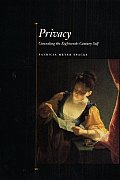 So I began a new book called Privacy: Concealing the Eighteenth-Century Self by Patricia Meyer Spacks -- I chose it because I was looking for interesting books about the eighteenth century, but then I began to realize that the topic is perfect for me to think about right now, having begun this blog only a couple months ago, because I'm sorting through what I think about privacy in a very direct way every time I write a post. Since this book looks at privacy through the lense of literature, largely the novel although including other genres, I'm afraid, reader, that you will be subjected to more quotations about Samuel Richardson. But not today.
Oh, sorry -- I just found the quotation I wanted to give you and it's about Clarissa. Okay, you will be endlessly subjected to quotations about Richardson, and I guess you'll have to deal with it. This is Spacks talking about the contradictions in Clarissa's attitude towards privacy:Desiring to slide through life unnoticed, she resolutely separates herself -- physically, as much as she can; psychically, almost completely -- from others ... Yet all eyes are upon her: the eyes of all she encounters, but also, by her prearrangement, the eyes of all who survive her: not only family and friends, but potential readers of the book to be compiled by Belford, for which she also arranges. She wants to slide through life unnoticed; she also wants all eyes upon her. She wants privacy; she wants fame.
This is quite the paradox -- she wants to be alone and wall herself off from others but she arranges her own exposure through writing and reading; she wants privacy and fame both. It sounds a bit like blogging, doesn't it? I write about exactly what I choose to write about, including some personal details and excluding others -- a lot of others -- and thereby I'm preserving my privacy. Sort of. Having a blog means that I'm violating my own privacy to some extent (if such a thing is possible -- if I'm the one doing the violating, is it violation?). I'm both hiding and revealing myself. The thing that amuses me about the picture I put up of myself on the blog a while back is that it's self-revelation -- but not really. It's Clarissa herself who's hiding my face. Clarissa writes and writes and writes -- the novel is made up of letters, a large number from Clarissa herself -- but her character is in a lot of ways still obscure. Writing about oneself can be a way of revealing oneself, but, paradoxically, of shielding oneself too.
I recently came across this post from Tales from the Reading Room, where Litlove describes why she blogs:If I did believe that identity was in fact composed of a myriad assortment of small narratives, and that our sense of self changed with the ebb and flow of the stories we told, wouldn't it be intriguing to watch such a dynamic in action?
The wording here is interestingly ambiguous -- who is intrigued? Watching the "ebb and flow of the stories we told" is intriguing for the writer and for the reader both, the "we" of Litlove's phrase. The writer is discovering things as she writes just as the readers is discovering as she reads. I would add that what's intriguing is not only watching the ebb and flow of a changing and fragmentary identity, but getting the sense of what is not said as well -- of the person that lies behind the posts, undescribed and unrevealed. Making writing public somehow enhances the feeling of depths unexplored, kept private.
Saturday, June 03, 2006
Book reviews
Thanks to Ella and her post introducing some new book bloggers (including me -- thanks again Ella!), I went over to check out Eve's Alexandria, a cool blog with lots of great book reviews. I saw this post on Zadie Smith, her book On Beauty, and Victoria's review of it. The story is that the review was negative, people left comments agreeing with the negative response, and Zadie Smith, or someone claiming to be Zadie Smith (impossible to tell), left a comment defending herself -- not defending the novel per se, but clarifying that she doesn't consider herself "the great young genius of the contemporary English novel," a phrase from one of the comments. Victoria's follow-up post is a discussion of negative reviews and the responsibilities of a book reviewer.
Victoria argues that a person has a responsibility to respond to reading honestly. She says:I’ve often heard it said that a citizen’s democratic duty is to question its government and to speak out when said government loses its way (that way, inevitably, being subjective). As I see it this is also a reviewer’s duty: to engage with the written word thoughtfully at a visceral level, to question its values and its purposes, and then to *write* back.
I remember reading at least one blogger arguing something different, although I can't remember who it was -- that in a world where (some would argue) reading is a threatened activity, where getting published is difficult, where writers should be encouraged, the best response when one doesn't like a book is to keep quiet about it. To ignore a bad or mediocre book, in this view, is to help ensure that it disappears and that better books get attention. The idea here isn't to be false to one's opinions, but simply to keep quiet about the negative ones.
Ultimately, I think, I come down on Victoria's side -- that it's best to say what I think, positive or negative or mixed, and thereby take part in and encourage a debate. I'm no fan of scorching Dale Peck-type reviews that are more about showing off one's ability to insult than about real engagement with a book, but I think lively debate about books is the best way to keep interest in reading alive. Only the kind of full engagement with reading that includes voicing negative opinions as well as positive ones will keep that debate going. Victoria says it beautifully:I want to be energised by my reading. If we don’t write back with all our energy how will they, the novelists and the future novelists, know what we’re looking for?
I would, however, freak out if I thought an author had read my negative response to a book. I don't want to discourage any writer. I want to make everyone happy. Zadie Smith's comment -- if it really was her -- sounded pretty hurt. This is difficult. But I think the value of analyzing one's response, be it positive or negative, outweighs the hope of encouraging reading by focusing on the positive (unless we're talking about a book by a friend -- in that case, preserving the friendship is more important).
One could also argue that negative reviews should have some kind of larger point to them -- the negativity should serve the purpose of illuminating what it is that makes good writing or how the writer could improve. This argument is stronger, but I'm still not fully convinced. I guess I don't like dictating the terms -- for myself or for others -- under which negativity is acceptable. I don't think we need to treat books as delicate things that need preserving.
The subject is complicated by the fact that this is a blog and not a formal book review site -- I think that the responsibility to be honest about negative opinions is greatest for someone who is paid to write reviews and those reviews get published in places where people look to get honest opinions about books (yes, maybe I'm naive -- I know things don't always work that way, but that's the idea). Here, it's not my "job" to give my best assessment of a book -- no one's paying me to do it -- people who happen to read the blog have no reason to trust me or to think they are getting my full opinion. I choose what I want to write about and what I want to say about it and I don't pretend to be complete or completely objective about anything.
But still -- if another book blogger wants to keep quiet about books she doesn't like, that's fine, but I'd prefer to think through -- by writing about it on my blog -- why I like and don't like certain things, recognizing that my view is subjective and others might not agree. I think to expend energy on books in this way ultimately helps out all writers.
Friday, June 02, 2006


On Poetry
I've had trouble, at times, fitting poetry reading into my life -- I've always wanted to be the kind of person who reads and appreciates poetry, but the image of myself as a reader and the kind of reader I actually am don't always match. And it's not just an image thing -- I've truly wanted poetry to matter to me. Waking this Morning Dreamless After Long Sleep
I think part of my problem with reading poetry has been that I've felt I needed to read a bunch all at once -- to make my way through a book of poems in a relatively short time. I don't know why I felt that way. Maybe it has to do with getting impatient if I'm in the middle of a book for too long.
At any rate, I'm trying not to care if it takes me months to read through a book, and to read poems only a couple at a time, for short periods of time here and there. If I try to read a whole bunch of poems at once, I feel like I'm not absorbing them and that there's no way I will remember them. Even reading only a couple at a time, I may not remember them, but I'm more likely to. If I set out to read only two or three poems at a time, then I'll spend more time with each one, and really feel like I'm engaging with them.
But that leads me to the other problem I have with reading poetry: I'm uncertain about how long to spend with each one. For me, it's like looking at art in a museum -- I get self-conscious about how long to look at each piece and when to move on. I begin to think about how long I've been standing there and how much longer I should stand there, rather than thinking about the art itself. With prose, while I may re-read a passage here and there to understand it better, the expectation is that a person will read through it once. But with poetry, obviously, re-reading is much more important.
I'm in the middle of Jane Hirschfield's book Given Sugar, Given Salt, and I've found that she has many poems that consider the relationship of writing and life -- how the page can merge with one's experiences in the world. Here is one example. I like the image she has of memory as a book where the ink bleeds through the pages and the idea that even our blank pages -- or new days -- are already written on by our previous experiences:
But with this sentence:
"Use your failures for paper."
Meaning, I understood,
the backs of failed poems, but also my life.
Whose far side I begin now to enter --
A book imprinted without seeming reason,
each blank day bearing on its reverse, in random order,
the mad-set type of another.
December 12, 1960. April 4, 1981. 13th of August, 1974 --
Certain words bleed through to the unwritten pages.
To call this memory offers no solace.
"Even in sleep, the heavy millstones turning."
I do not know where the words come from,
what the millstones,
where the turning may lead.
I, a woman forty-five, beginning to gray at the temples,
putting pages of ruined paper
into a basket, pulling them out again.
Thursday, June 01, 2006
More meta-blogging
I was excited to read this post from Kate's Book Blog. Yes, she quotes me in this post, but that's not why I was excited -- it's because the part after she quotes me is so interesting. She talks about travel writing first of all, and describes two kinds: travel writing that foregrounds the author's own experience as well as the places traveled through and travel writing that tries to be objective and authoritative by removing the presence of the author. Kate prefers the former kind, and I fully agree -- it strikes me as more honest if an author doesn't pretend to be objective, since this, when it comes down to it, is impossible. How is this brief meditation on travel writing relevant to the practice of book blogging? My favourite litbloggers travel into books with an open mind and send back dispatches. They don’t purport to describe the book in objective fashion; they write about their encounter with the book revealing something about their previous reading, their preconceptions, their aesthetic sensibilities along the way. If it’s a return visit rather than a first encounter, they may reflect on shifts in their perception of the terrain this time around. And, most important, rather than expecting fellow readers to take their word as final, they encourage us to pick up the book and see it for ourselves.
One of my favorite travel books along these lines is Mary Wollstonecraft's Letters Written During a Short Residence in Norway, Sweden, and Denmark. Here Wollstonecraft has a lot to say about what she sees in these countries, but she also writes a lot about her mental and emotional state as she is traveling and thinks about how this state affects the observations she makes. Before she left on the trip, she found out her lover had been unfaithful and she made a suicide attempt, and she doesn't write about these details in the text, but she alludes to sorrow and heartbreak. It's a short, beautifully-written, evocative book.
But Kate also makes a point about how blogging can be like travel writing:
Litblogging here is a "journey" through books, reported on subjectively, with self-awareness and without the illusion of objectivity -- I like that. Aunt B. has something to say about this as well, from another angle:That's what I love about blogging--you throw out some ideas, you get some feedback, you come at those ideas from a slightly different way next time, you get more feedback. Writing in this setting isn't about a finished, set, product, but about circulating ideas and clarifying what you think. I love to blog because, when I write, I know you, whoever you are, will read it.
Here, blogging is exploration, or travel, as well, this time with input from readers, and it's about remaining open to change and revision. Ideas keep circulating (travel!) rather than settling down into something finished.