Showing posts with label Books. Show all posts

Sunday, December 31, 2006

The new year

I feel uncertain about making resolutions for the new year, not being a resolution-making kind of person and especially having just read Bloglily's very sane post on the topic. But I do want to think about what I'd like to accomplish this year, if only to try something new. So here are some goals, but I won't beat myself up if I don't reach them. Mostly they have to do with reading, although I'll end with some cycling goals.

First of all, back in October I made a list of 13 classics I'd like to read in 2007, and I'd like to complete that list, with one change. Here's the list again, with James Boswell's Life of Johnson substituted for the Burney novel, either Camilla or Cecilia, I'd had on there originally:

1. Marcel Proust, The Guermantes Way, Sodom and Gomorrah, The Captive, The Fugitive, and Time Regained.
2. Anne Bronte, The Tenant of Wildfeld Hall.
3. James Boswell, The Life of Johnson.
4. Miguel de Cervantes, Don Quixote.
5. Virginia Woolf, The Voyage Out.
6. Virginia Woolf, The Years.
7. Thomas Mann, Buddenbrooks.
8. Gertrude Stein's Three Lives.
9. Elizabeth Gaskell, Cranford and/or Wives and Daughters.
10. Balzac's Cousin Bette.
11. William James, The Varieties of Religious Experience.
12. Thomas DeQuincy's Confessions of an Opium Eater.
13. James Hogg, Private Memoirs and Confessions of a Justified Sinner.

I'm determined to finish Don Quixote, Buddenbrooks, the Woolf novels, the William James, and the Proust novels; the others I'd really, really like to read but if I don't, that's okay. Considering my reading pace, 50-60 books a year, this list is pretty ambitious.

After that, I really don't want to get specific about what I want to read, as I like room for spontaneity. But here are a few things I'd like to do:

  • Read more poetry than I did last year. As I read 2 1/2 books last year, this will mean 3 books, plus finishing up the 1/2 I have left in my current book -- Jane Kenyon's Otherwise.
  • Read more plays than I did last year. As I read no plays at all last year, this will meant reading at least one. We have a copy of Angels in America around the house I might pick up. I just realized, however, that I'll be teaching a play this spring -- as yet unidentified -- and I suppose that will count. It kind of feels like cheating, though, in a weird way. If I'm reading it for work, it shouldn't count for my New Year's resolutions? That's silly.
  • Read more short stories. I managed one collection (Alice Munro) and some individual stories for A Curious Singularity, so this means I'll try to read two collections and probably more individual stories for the short story blog.
  • Read more books in translation. Last year I read 8. If I read all the books listed above, that will be 7 (Balzac, Mann, Cervantes, and 4 volumes of Proust). Any other books I read in translation I'd like to be non-European. (I'll check out Book Traveller's posts for inspiration.)
  • Read one science book. I love reading science but I haven't done it lately. I have Brian Greene and Bill Bryson on my shelves; one of those will do nicely.
Okay, I'll stop there. I could on, but the fewer goals I have, the likelier I am to reach them.

Before I begin all this, however, my first order of business is to decide which blog I want to use, the Blogger one or the Wordpress one. I can make the big, life-shaping decisions almost instantly, but the little decisions take me forever.

As for cycling, I'm not sure what goals to set, as I'm really still not sure what I'm capable of. But here's an attempt:
  • This past year I rode somewhere between 3,656 and 3,700 miles (depending on how far I ride today). For next year, I'd like to ride at least 4,000 miles but preferably as many as 4,500. The 3,656 number counts only outdoor rides on my road bike; I rode a few more miles on the indoor trainer and on my mountain bike, but those I can't easily count. I'm aware that when it comes to preparing to race, I should probably focus less on the number of miles I ride and more on the level of intensity with which I ride those miles, but one of the things I learned last year is that I don't have enough of an endurance base, so reaching a certain base level of miles ridden seems valuable.
  • I'd like to ride in more races than I did last year. Last year I did 16 -- not all of them were official USCF races, but the non-official ones were just as challenging. I did 13 criteriums and 3 road races. I wimped out on a few races in May and June and then I got burnt out toward the end of the summer and stopped racing, so this coming year I'd like to complete more and stick with it longer.
  • I'd like to stay with the pack longer in each race and not get dropped as often. This goal should be more specific, but I don't know how to make it so. So I'll just have to say that I'm going to train harder so I'm stronger and therefore won't be quite as easy to leave behind.
We'll see how I do. Chances are I'll accomplish some of these things, but other, maybe better, things will happen and the year will turn out differently than I expect.

Saturday, December 30, 2006

More on Footsteps

I love books that deal with an intellectual problem or issue in a personal way -- books that are as much about the author grappling with the issue as they are about the issue itself. Richard Holmes's Footsteps is just such a book; it's about biography as a genre and about the lives of various writers Holmes has researched, but mostly it's about Holmes's process of learning how to write biography and his discoveries about what we can and can't know about the past and about other people's lives.

I've written about Holmes's chapter on Robert Louis Stevenson, where he writes about following in Stevenson's tracks through France; I've now read his chapter on William Wordsworth and Mary Wollstonecraft and I'm halfway through his chapter on Percy Shelley. The Wordsworth/Wollstonecraft (mostly Wollstonecraft) chapter is about their experiences of the French Revolution, but Holmes gets at the topic by writing about his own experience of the student uprising in Paris in May 1968. He tells about getting caught up in the action on the streets and how an officer held a rifle to his chest, and when Holmes said he was English to try to get out of the situation, the officer told him to mind his own business and go back home to England. Holmes moves from there to considering what it was like for Wordsworth and Wollstonecraft to be in an analogous situation -- foreigners experiencing another country's revolution. Holmes wants to know what it was these two were seeking in France and what they might have felt.

This leads him to think about the differences between a rational reaction to revolution -- a philosophical take on events -- and an imaginative and emotional one -- its personal impact. Wollstonecraft was capable of being very philosophical about the revolution, in the sense of distant and nonemotional. She could even be a little glib. But when she actually lived through some of the revolution's most dramatic events, it changed her. Both Wordsworth and Wollstonecraft went through some personally harrowing times while in France, and somehow these personal events (love affairs, babies) and the political ones connect. Holmes speculates that the real effects of revolution aren't so much political as they are personal -- the internal turbulance revolution causes matters just as much as the political turmoil, and the internal revolutions might cause longer-lasting changes. He isn't quite so despairing about the failure of the May 1968 uprising when he thinks about revolution in this sense -- the immediate political goals might have been left unfulfilled, but it did cause changes in the way many people thought and acted.

Perhaps these are the conclusions one might expect from a biographer, one who is focused more on individual lives than on the sweep of history.

At any rate, I like Holmes's method of placing himself in the middle of his discussions of 18th and 19th century people, and he's careful not to make too much of the parallels too -- the comparison between the French Revolution and May 1968 can only go so far, after all. But it gives him a way of getting inside the experiences of people long dead -- a way of imagining what they might have seen and thought and felt.

Holmes has some amazing things to say about what it's like to write biographies and he makes me want ... not to write a biography exactly, but to research a writer deeply. I may write about this more later (I'm by no means through with posting about this book!), but for now I'll leave you with this quotation:

In daily human affairs notoriously, we all do sometimes act apparently out of character -- especially in situations of great stress or temptation or depression. In such situations one could say that a person's sense of their own identity is diminished, and that they act almost in spite of themselves. Yet the biographer views and witnesses these daily human affairs in a special and privileged perspective. He gains a special kind of intimacy, but quite different from the subjective intimacy that I had first so passionately sought. He sees no act in isolation; nor does he see it from a single viewpoint. Even the familiarity of a close friend or spouse of many years suffers from this limitation. The biographer sees every act as part of a constantly unfolding pattern: he sees the before and the afterwards, both cause and consequence. Above all he sees repetition and the emergence of significant behaviour over an entire lifetime. As a result I have become convinced of the integrity of human character. Even a man's failings, sudden lapses, contradictory reactions, sudden caprices, seem in the long run to fall within a pattern of character. One could say, paradoxically, that people even act out of character in a certain way; there is always, so to speak, meaning in their madness, provided one has full knowledge of the circumstances.

Friday, December 29, 2006

By the numbers

I thought I'd do one more post about the past year; it occurs to me that looking at some of the numbers might be interesting and might show me something about how I read. I have never kept track of my reading quite so carefully before, so I might as well take advantage of it and analyze the information I've got.

  • Books read: 56 (it might possibly go up to 57 by Sunday night, but I'm not sure, so I'll leave it at that.)
  • Novels: 36
  • Nonfiction: 17
  • Poetry collections: 2 (although I'm now halfway through another one.)
  • Short story collections: 1
  • Journals/diaries (included in the nonfiction number): 2
  • Books written by men: 24
  • Books written by women: 32
  • Books in translation: 8
  • Books from the 11th century: 1 (The Tale of Genji)
  • From the 18th century: 4
  • From the 19th century: 6
  • From the 20th century: 23
  • From the 21st century: 22
  • From the 20th or 21st century but about an earlier century: 6
  • Books read for book groups (online or in-person): 7
  • Nonfiction about books, reading, literature, or literary history: 9
  • Travel books: 2 (Tobias Smollett and Rory Stewart)
I tried to count how many essay collections and memoirs I'd read, but I run into problems with categorization; for example, is Pankaj Mishra's An End to Suffering a memoir? A history book? A book on religion?

I have no idea what percentage of men vs. women I've read in the past; it wouldn't surprise me, though, if I usually read more men than women. But this time I read more women than men, which makes sense to me, as I felt throughout the year that I was discovering a lot of women writers I really like: Rebecca West, Anita Brookner, Muriel Spark, Elizabeth Taylor.

I see I haven't read as much from the 19th century or earlier as I thought I might -- 11 books. Maybe for next year the classics challenge I'm doing (13 books) will change that. Not all of the 13 are from the 19C or earlier, but with those and others I might increase the number. But if I add in the books I read about earlier centuries, I reach 17, which isn't too bad.

I'd like to read more books in translation. And more short story collections, and more poetry, and more travel books, and more essays, and more books on religious history, and more books on literary history, etc., etc. It's the problem Stefanie wrote about: what to do when with every new book one reads (especially history and books about books), one's to-be-read list grows? I'd like to read in many different areas, and I'd also like to read deeply in a few, but I can't do both. My list of books I'd like to read now has 167 books on it, which doesn't include the 90 books I own but haven't yet read. Yikes!

Thursday, December 28, 2006

I'm back!


The Hobgoblin and I returned yesterday, and we're mostly settled back in. It's nice to get away, but just as nice to return home again. Yes, I know, it's a very cliched thing to say, but I feel it strongly anyway. I like seeing my family, but unfortunately, it only takes a few days before I begin to return to my irritable, annoying, obnoxious, I-can't-stand-the-world-and-my-parents-drive-me-crazy 13-year-old self. Will that self ever die away? I'm beginning to doubt it.

I had a very nice trip, all irritability aside. I got to see 4 of my 6 siblings, one brother-in-law, one sister's boyfriend (or ex-boyfriend? I can't quite figure it out and didn't get a chance to ask -- to ask my mother, of course, as I wouldn't have asked my sister. That would be awkward), and some acquaintances at the Christmas Eve service. I was able to keep up my tradition of complaining bitterly about the awfulness of the Christmas Eve service, as it was suitably awful this year. Sometimes it's awful in a "let's have a birthday cake for the baby Jesus" kind of way, but this time it was awful in a "let's draw on as many offensive gender stereotypes as we can, even if they are irrelevant to the sermon" kind of way. I made sure not to ride home from the service with my parents, as I wasn't feeling irritable enough at that point to want to offend them and hurt their feelings. Traditions are nice, aren't they?

Christmas itself was nice, and I got a lot of cool things -- the Hobgoblin gave me a copy of Michael Dirda's Book by Book, which I've now read a little in, and it promises to be interesting. It will feed my current interest in books on books and reading. My mother-in-law gave me a Barnes and Noble gift card, so we went there on Tuesday, and I found Lawrence Weschler's Vermeer in Bosnia, which has been on my TBR list for a long time, and Jeffrey Robinson's The Walk: Notes on a Romantic Image, which will feed my other current obsession with books about walking. I was happy to find some good nonfiction books; I love novels, of course, but often the books that get me most excited and fuel multiple long blog posts are nonfiction ones. And Christmas isn't quite over yet, as I know I have a box coming from a friend who always sends me books. Yay!

The Hobgoblin also got me a new pair of cycling shoes, which are black and very cool looking:


Oh, and he also got me a sticker with my new "photo" or avatar or whatever you want to call it:


A couple of people have asked where it comes from -- it's from one of my favorite novels ever, Tristram Shandy; it's the narrator's rendering of his story's plotline -- very digressive. I like the picture because I love the novel, of course, and ... I like digressions.

I read a little bit, more in Proust and Richard Holmes's Footsteps, and a little of the Dirda book, but mostly I sat around and did nothing. I needed a few days of that. I sat around and did nothing, and I also watched a lot of episodes of "The Office," which was great fun; as we don't have TV, we miss a lot of crap but also some good stuff, and I was happy to catch up on some of the good stuff.

So -- I'm happy to be back reading your comments (thanks!) and catching up on blog posts and posting once again myself. I hope to do some goal-setting around here soon, and maybe some more summing up of my year, and definitely some more raving about Footsteps, and I might finally get around to beginning Buddenbrooks.

Friday, December 22, 2006

Orhan Pamuk's Snow

This is my last post for a while, as the Hobgoblin and I are heading out to my parents' place in western New York state tomorrow. As they have very slow dial-up, I think I'll have to do without blogs for a few days. It'll be hard, but I'm going to try my best not to let it get to me. I'll be back by the middle or end of next week.

I finished Orhan Pamuk's Snow last night and was very impressed. It's a beautiful book and one that taught me a lot about Turkey and Turkish culture. I don't mean to make it sound didactic, but I do think that reading novels is a good way to get a sense of another country and culture. Snow dealt a lot with the conflict between Eastern and Western Europe -- the main character Ka has been in exile in Germany for many years and in the novel returns to the Turkish city of Kars, and throughout, he is faced with questions about what it means to have become westernized but not to be fully western. Connected with this cultural conflict is the religious one -- shortly after Ka arrives, the city of Kars undergoes a military coup, meant to keep religious conservatives from winning the upcoming election, and throughout the novel religious differences turn violent. Ka takes part in many philosophical and theological discussions about what it means to have given up his faith and about whether or not he has become an atheist.

Ka wanders the city and gets himself involved in adventures; he isn't all that interested in all the conflict going on around him -- he'd really rather write poems and talk to Ipek, the woman who is the real reason he has journeyed to Kars (the ostensible reason is to investigate a rash of suicides committed by young religiously conservative women who want to keep wearing their head scarves). All this is a way for Pamuk to write about religious and political conflict, but it's also a way for him to consider the relationship of the artist to the political world. It seems like nearly everybody in the novel has aspirations to be a writer; so many people Ka talked with had poems stashed away somewhere or used Ka to try to find a publisher for their work. The novel's closing section centers around a play, an incredibly loose adaptation of Thomas Kyd's The Spanish Tragedy, which brings together all the novel's themes and works through the conflict the city is experiencing.

One thing I found particularly interesting is the way the narrator becomes a character himself, gradually talking about himself more and more as the story proceeds. The narrator's name is Orhan, making him a stand-in for the author himself, or perhaps another version of the author. At first I found this narratorial intrusion awkward; I wasn't sure who the narrator was supposed to be and what his relationship to Ka was. All this cleared up gradually, however, and by the end we know quite a lot about him and his presence in the novel adds a layer of complexity to it. His relationship with Ka reminds me of Richard Holmes's book Footsteps, which I'm currently in the middle of, and also a little bit of The Places in Between by Rory Stewart; in all these examples, one person is following in the footsteps of another, trying to puzzle together what that person's life is like and to see what that person saw. And then each person writes a book about it. In the case of Snow, the narrator is doing research on a novel about Ka, walking where Ka walked and talking to the people he knew. He follows the exact route Ka took on a book tour, staying in the places he stayed and asking audiences what they remember about Ka.

All this brings me back to travel metaphors, the subject of an earlier post, because part of the narrator's writing process is traveling (which is true for Holmes and Stewart as well), but writing about travel is itself also a kind of travel (one could say all writing is a kind of travel), as the writer follows the map of the journey, this time in words. And it's true for the reader too. Following in someone's footsteps can be done by crossing a landscape but it can also happen as a book gets written and as it gets read. So the narrator tries to relive Ka's life twice -- once by following his path through western Europe and Turkey and another by writing about the experience.

There's another sense in which the novel is about writing itself. Pamuk talks about what a novel can and can't do; in one scene, the novel's narrator talks with another character, Fazil, who is troubled that the narrator plans to write a novel about him and the other residents of Kars. This is what Fazil says to the narrator:

"But I can tell from your face that you want to tell the people who read your novels how poor we are and how different we are from them. I don't want you to put me into a novel like that."

"Why not?"

"Because you don't even know me, that's why! Even if you got to know me and described me as I am, your Western readers would be so caught up in pitying me for being poor that they wouldn't have a chance to see my life. For example, if you said I was writing an Islamist science-fiction novel, they'd just laugh. I don't want to be described as someone people smile at out of pity and compassion."
In another scene, the narrator asks Fazil what he would like him to put in his novel, and this is Fazil's answer:
"If you write a book set in Kars and put me in it, I'd like to tell your readers not to believe anything you say about me, anything you say about any of us. No one could understand us from so far away."

"But no one believes in that way what he reads in a novel," I said.

"Oh, yes, they do," he cried. "If only to see themselves as wise and superior and humanistic, they need to think of us as sweet and funny, and convince themselves that they sympathize with the way we are and even love us. But if you would put in what I've just said, at least your readers will keep a little room for doubt in their minds."
So we come up against the problem of whether a novelist can capture the truth of somebody's experience so that a reader can really understand it, so that the reader can get beyond expectations and stereotypes and keep from pitying the poor people of Kars, and so that the novel won't just be another way of reinforcing the separation between east and west. I opened this post talking about what I learned from the novel, so I guess I do believe that reading novels can tell us something true about other people's experiences and can help people bridge cultures, but I appreciate this warning about what a complicated process it can be.

Wednesday, December 20, 2006

Footsteps

I'm taking a break from summing up my year (more on that to come though!) to write about Richard Holmes's book Footsteps: Adventures of a Romantic Biographer, of which I have now read about 35 pages, and 35 captivating pages they are. I've found a new quotation for my blog (see above) and have become convinced I need to read Robert Louis Stevenson's Travels with a Donkey in the Cevennes. Holmes is following in Stevenson's footsteps and writing about his travels and also about his devotion to Stevenson and to the genre of biography.

In one scene, Holmes describes how he has become so obsessed with Stevenson, he feels that Stevenson is actually there, and as Holmes walks through towns and looks at faces, he searches for Stevenson's likeness. But then he experiences a disappointment: although he has tried to follow his footsteps exactly, he realizes that the bridge on which he crossed a river is not the one Stevenson had used; instead, he finds an old crumbling bridge a little further upstream that marks his path. His response is powerful: "The discovery put me in the blackest gloom. It was stupid, but I was almost tearful."

What he realizes is that he cannot follow in Stevenson's literal footsteps -- the route has changed over the course of the hundred or so years that separate them -- but also that he cannot find Stevenson himself; he cannot perfectly follow the traces of his life. A biographer can only approximate the life, can only follow in the subject's footsteps at a distance; there is always a gap between biographer and subject:

Even in imagination the gap was there. It had to be recognized; it was no good pretending. You could not play-act into the past, you could not turn it into a game of make-believe. There had to be another way. Somehow you had to produce the living effect, while remaining true to the dead fact. The adult distance -- the critical distance, the historical distance -- had to be maintained. You stood at the end of the broken bridge and looked across carefully, objectively, into the unattainable past on the other side. You brought it alive, brought it back, by other sorts of skills and crafts and sensible magic....

... it was the first time that I caught an inkling of what a process (indeed an entire vocation) called "biography" really means. I had never thought about it before. "Biography" meant a book about someone's life. Only, for me, it was to become a kind of pursuit, a tracking of the physical trail of someone's path through the past, a following of footsteps. You would never catch them; no, you would never quite catch them. But maybe, if you were lucky, you might write about the pursuit of that fleeting figure in such a way as to bring it alive in the present.
I'm a sucker for travel metaphors and I like this one -- to write a biography is to travel along with the subject, following in that person's footsteps on his or her life's journey. Holmes is physically acting out his life's work, covering the landscape Stevenson had crossed, attempting to see the things Stevenson's saw, but seeking Stevenson's mental and emotional landscape as well as his geographical one. And he both succeeds and fails in this attempt -- time and change create a space between Holmes and Stevenson that can't be bridged. I like that it is a journey that teaches him this lesson and that he has turned this lesson into a book; Footsteps is a travel book in two senses (but all travel books are this, aren't they?), physical travel across a landscape and an intellectual and emotional journey as well.

Tuesday, December 19, 2006

My year in books, continued

When it comes to books, it's been a year of changes. First of all, of course, this year I began blogging, and this has changed my reading life -- my life, period -- pretty radically. I used to keep a wimpy list of potential books to read that was about 10 books long and I hardly ever looked at it, and when I was in the store, I'd often have trouble finding something I wanted. No more, let me tell you. Now my list of books I'd like to read is something like 250 books long and growing fast. I've found dozens of blogs I read regularly, and I've learned so much about books and authors I'd never heard of before from them. I think about books and the publishing world differently now that I blog and read blogs.

And I read differently, knowing that I will write here about everything that I read. I've always felt that my reading should have some purpose; with my well-developed Puritan work ethic and sense of guilt, I can't just read purely for pleasure very easily. Being an English teacher is one way of "doing something" with my reading, but I've discovered that blogging is another. My reading doesn't stop with me; instead I write about the experience and people read me and sometimes write back. Something of my reading experience gets circulated back out into the world in a more direct and immediate fashion than it used to, and I like that a lot.

Blogging has meant that I'm now involved in conversations about books I never was before, and I'm part of books groups -- online and in-person -- that are new to me. I've made some great online blogging friends, and one of them, Emily, turns out to live near me, so we can be -- what do you call them, in-person? traditional? regular? -- friends too. I'm reading Proust because of blogging, and I'm reading more short stories, and I'm reading new books because of the Slaves of Golconda. As other people have said before, it's like being in a very fun literature class, or like being part of a literary salon. It's class without the grading and where I write all the "papers" effortlessly.

My reading habits have changed this year as well. I'm now reading poetry again, which I'm very happy about. I don't read it very fast, but I do read it regularly. I'm reading multiple books at once, which means I feel able to read more challenging things -- if I have only one book at a time, I'm much less likely to pick up something long and difficult because I don't want to find myself stuck with it and bored. I can tackle something difficult for a while, and then put it down for my fun novel or nonfiction book. This means I'm not finding it difficult to read Proust. Rather than driving myself crazy trying to read it and it alone, I'm reading it along with a lot of other books that provide some variety.

What else ... I found Book Mooch, which means I have whole shelves full of books strangers have mailed me, and I mail books out to strangers now and then. Half of the books on this year's list I might not have read if it weren't for blogging. I've taken to accumulating books at a frightening rate. I never used to do this; I generally bought books at the pace I read them, but no more.

I've developed some unexpected obsessions this past year -- for books about books and reading, for example. I've read 4 of these books this year -- by Jane Smiley, Alberto Manguel, Sara Nelson, and Nick Hornby -- and I am looking forward to reading more. I had a brief but intense love affair with footnotes after reading The Mezzanine and Dracula (the editor's footnotes were wonderful). And I've recently gotten excited about books on walking, with Rory Stewart's book and now Footsteps, and with Rebecca Solnit's A Field Guide to Getting Lost on my shelves, and W.G. Sebald and Bruce Chatwin waiting for me. I also discovered the joys of reading diaries -- Virginia Woolf's and Frances Burney's in particular.

All this feels like a lot in one year. It makes me wonder what next year will bring.

Monday, December 18, 2006

My year in books

I suppose I can resist no longer -- it's time to begin summing up my year in books. I think I'll do a couple posts on the topic and at least one on my year in cycling. But for now, here's a list of the books from 2006 I liked the best. I only read maybe 2 or 3 books published this year (some of them I'm not sure if they are this year or last), so it's by no means a guide to this year's books. It's just a list of things I liked.

  • Philip Pullman's His Dark Materials trilogy. I loved these books and flew through them. I haven't read young adults books in forever, and these books made me think that's a shame. I'm certain I'll re-read them at some point when I need something fun. I found the plot absorbing, but the ideas were too.
  • Mary Oliver's American Primitive. This is the first book of poems I picked up when I decided to try reading poetry again after years of not doing it, and I'm so glad I did. The poems are beautiful and moving, and -- if you like poems about nature that aren't sentimental (in the bad sense) or sappy, give this book a try.
  • Elaine Scarry's On Beauty and Being Just. This short book inspired me to write about it on this blog so many times, I was afraid you all would get tired of hearing about it. I found it a beautiful book, as befits the title, one that I read through slowly because I wanted to stop and think about its ideas so often.
  • Rebecca West's The Fountain Overflows. West captures childhood so well in this novel. The narrative voice is irresistable. It's a portrait of a troubled family, and it seems to me to describe a young girl's experience of such a family perfectly.
  • Marcel Proust's Swann's Way. Many thanks to Stefanie for starting the Proust blog and inspiring me to tackle this book -- actually, I've tackled all of In Search of Lost Time, which I should be able to finish in 2007. Without the group blog, I may never have read this book, and I'm so glad I did.
  • Nicholson Baker's The Mezzanine. Another one I posted about often. This novel follows the main character's thoughts as he travels up an escalator on his way back to work after his lunch hour. And that's the whole plot. It felt more essayistic to me than novelistic, complete with footnotes as it was. And it got me off on a long string of posts about footnotes.
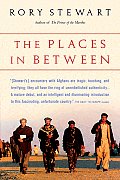
  • Rory Stewart's The Places in Between. I was enthralled at Stewart's sense of adventure and his bravery and his ability to write about his walk across Afghanistan. I finished this one only recently, and it's inspired me to read more contemporary travel writing, particularly books about long walks.
I could list more, probably, but as I will have read 56 or 57 books by the end of the year, listing 7 favorites seems about right, if I'm trying to focus on the ones I thought were the best. Actually, it's 9 favorite books because I counted the Pullman books separately in my year's total. As I was coming up with the list, I didn't try to pick different genres, but I'm happy to see there was variety, with some poetry and nonfiction on the list, and it makes me think I should make sure to read lots of both next year, along with tons of novels, of course.

Sunday, December 17, 2006

Books I've begun


I began Orhan Pamuk's Snow a week or so ago and I'm enjoying it. I'll probably wait to say anything substantive about it until I've finished it (I'm maybe 2/3 of the way through), but it's an interesting follow-up to Rory Stewart's The Places in Between, since both books deal with Islam, although in very different settings and in different ways. But Snow is very much about the conflict between secularists and fundamentalist Muslims and the changes Islam has undergone and the changes it's brought about in the last few decades, just as Stewart's book is. I like the way Pamuk deals with the political issues -- largely through his hapless main character Ka who wanders rather aimlessly around the Turkish city of Kars, trying to woo the beautiful Ipek and getting himself into trouble. Political and religious conflict is all through the novel, and we see a lot of it directly, but we also get it filtered through Ka's experience, which helps balance out the serious tone and subject matter. I will say I find it a tiny bit slow-going. It doesn't have much narrative drive. But that's okay, I think, as the ideas and the characters are so interesting and well-done.

Last night I began Richard Holmes's book Footsteps: Adventures of a Romantic Biographer, and I'm really excited about it. I've only read about 5 pages, but I can tell this is going to be just the kind of book I like -- it's a mix of personal narrative, travel book, and biography. It starts off telling the story of Holmes's journey through part of France, following in Robert Louis Stevenson's footsteps. Both of them traveled mostly on foot, sleeping outside many nights and getting fed by local villagers. It reminds me once again of Rory Stewart, although again it's a very different experience. But Stewart was also following someone's footsteps, in his case, Babur, a 16th century man who founded the Mughal dynasty of India. Both Holmes and Stewart are looking for traces of history as they travel through and write about the modern world.

Holmes will go on to write about Mary Wollstonecraft, Percy Shelley, and Gerard de Nerval -- in this book, more exactly, he'll be writing about the experience of traveling in their footsteps as well as writing about the people themselves. It promises to be a great mix of the historical, the critical, and the personal.

Friday, December 15, 2006

Franz Kafka's "A Hunger Artist"

Cross-posted at A Curious Singularity

I have a copy of Kafka's Complete Stories; it's been sitting on my shelf for quite a while, and I'm not sure if I'll ever read all the stories in it, but I would like to read more, as I enjoyed "A Hunger Artist." I feel like I've read a lot of Kafka, but when I think about what, exactly, I've read, I realize it's only The Trial, and that I read over a decade ago. Maybe I've read a lot about Kafka and that makes me feel like I've actually read a lot of his work. The term "kafka-esque" is very easy to throw around in conversation, and so it's not hard to begin to think I've got him all figured out.

I don't think I've got him all figured out, but "A Hunger Artist" didn't upset my expectations of what I'd find in a Kafka short story -- you could call it "kafka-esque": it feels like a parable; it deals with ideas as least as much as characters and more so than plot; it's absurd, and yet the story is told as though it weren't; it's about darkness and suffering and yet there's something fine and admirable about it.

At the center of the story is the paradox of the "hunger artist" himself -- how can one be a hunger artist? What's artistic about not eating? The narrator tells us the hunger artist believes in "the honor of his profession," and we learn that no one but the hunger artist can know for sure he is not cheating, so "he was therefore bound to be the sole completely satisfied spectator of his own fast." So there is something mysteriously artistic about fasting, and not only that, but the hunger artist is the only one who really understands it. He also says that although no one else knows it, fasting is easy, further undermining the "artistic" element of it. And there's the twist at the end where we learn that he fasts because he can't find food he likes to eat. So in what sense is fasting artistic?

I don't know, really, but it defines art as a complex give and take between artist and viewer. The artist knows fasting is easy, but the viewers won't believe it, so they insist that they are witnessing an act in one sense or another -- the artist is either "out for publicity or else was some kind of cheat who found it easy to fast because he had discovered a way of making it easy," i.e., he managed to sneak food into his cage. So part of the "art" is simply doing nothing and then letting viewers make what sense of it they will. The more the artist insists he's doing nothing, the more "artistic," partly as in "artifice" and "artificial," the viewers think it is.

Art in this story is nothing -- it's negation and refusal. It's about letting the body waste away, until it disappears at the story's end. And yet the art is nothingness that creates an event. It's a refusal of the body that's also a display of that body -- a weird denial of and celebration of the body. If art here is about nothing, it's also about death -- the artist makes his living off of dying.

No wonder taste is changing and people pass him by to head for the menagerie, and no wonder they prefer to see the panther, so full of the joy of life. And yet I don't think the story is leading us to sympathize with this changing taste; the hunger artist seems to be an admirable figure, and the people who refuse to appreciate him are refusing to see something real and true about life. It's like the hunger artist is the one who can recognize the true nature of things -- that everything ends in death and nothingness. He is an artist because of the way, simply by placing himself in a cage and refusing to eat, he can turn nothing into something -- he makes some kind of meaning, difficult and distressing though it may be, out of emptiness.

Thursday, December 14, 2006

Books, books, and more books

I've written before about not mooching more books, but I haven't kept that resolution. Surprise, surprise. How can I resist when they are free?? I know I have to mail books to other people in order to mooch books for myself, but it still feels free. I still have four points left, which means four more free books. There are lots of things that look good, but I'm trying to keep the points for books I really, really want, ones I just can't resist. I was this close to getting a copy of Elizabeth Gilbert's Eat, Pray, Love, for example, but somebody else mooched it before I could put in my request. Sigh.

But, in addition to Alberto Manguel's A Reading Diary and Edmund White's biography of Proust which I mentioned in a previous post, I recently received a Penguin Classic with some of Jane Austen's lesser-known work: Lady Susan, The Watsons, and Sanditon. Books by Jane Austen that I haven't read! What's taken me so long?

I also received just today Rebecca Solnit's A Field Guide to Getting Lost. Solnit is one of my literary heroes. I was reading her book Wanderlust a year or so ago and took it with me on a plane trip and noticed a woman in the airport watching me reading the book with some curiosity. I realized later that the woman looked suspiciously like the author photo of Solnit. I can't be sure, but it might have been her, noticing me reading her book. I wish I could have told her how inspiring I thought her book was.

And, thanks to a mention by Litlove, I have Assia Djebar's Fantasia: An Algerian Cavalcade on the way, which will do very well when I'm looking for something outside of my usual reading pattern, and also Peter Matthiessen's The Snow Leopard, which will help satisfy my interest in books about walking.

On another topic entirely -- I read Franz Kafka's story "A Hunger Artist" the other day, and I'm planning on posting about it on the short story blog A Curious Singularity, but I haven't quite had the time -- or maybe it's that I haven't had the energy and the courage? -- to write about it yet. I need to re-read it for one thing. And for another, I'm not sure what I will say. It's a great story though, wonderfully strange.

And one more random note here -- I've been trying to decide if I want to do the Winter Classics challenge, but I'm unsure. Part of the problem is time -- I want to finish up the From the Stacks challenge, and I'm not sure I'll have time to do both of these. The other is that I tend to take reading plans and challenges very seriously and if I did it, I'd probably read dutifully through the list, and I think it's better if I keep some room for spontaneity in my book choices. Challenges are fun and I like being a part of a group and they are so tempting because books plans and reading lists are fun, but I'd probably better stay away.

Tuesday, December 12, 2006

Reading patterns

Danielle posted a great set of questions recently (I find Danielle's blog a great source of inspiration -- uncertain what to blog about? Go check it out and you'll find an idea):

Do you read a certain type of book more than others? ... Do you choose books mainly for the story? Or do you just try anything at all? Do read outside your comfort zone often?
I'm not sure if I do read a certain type of book more than others. I do have a certain kind of book that's a comfort read; this year that's meant authors like Anita Brookner and Elizabeth Taylor and Curtis Sittenfeld -- these authors write character-driven books that are fairly introspective, quiet, domestic, and most often about women.

But I don't know that I read this type of book more often than others. I suppose I'm drawn to contemporary literary fiction of the prize-winning type -- think Alan Hollinghurst, Alice Munro, David Mitchell, Kazuo Ishiguro, my recently-bought-and-still-unread Kiran Desai -- but obviously these examples don't really fit neatly in a category.

And if I read too many of this type of author, I start to get a bit restless and begin to long for something different. I've been feeling this way lately. My current novel, Orhan Pamuk's Snow, is providing me with something a little different, as it's set in Turkey and it's a novel in translation, but I could easily have listed it in the previous paragraph as contemporary literary fiction of the prize-winning type.

The other kind of book I turn to frequently is the 18C or 19C novel. This year I've read Frances Burney and George Sand and Bram Stoker and Jane Austen and Henry Mackenzie, and that's pretty typical.

All these types of books are easy for me to pick up, and they are what I'm drawn to most naturally. But I do try to read things outside this pattern -- most often when I'm consciously picking out something different, it will be a work in translation or something modernist or postmodernist that feels like a challenge, or maybe a classic that isn't necessarily as easy to read as Dickens -- say, The Tale of Genji, which I read earlier this year. I've got Samuel Beckett's Molloy on my list of things to read, which fits into this "stretching myself" category, as does Gertrude Stein's Three Lives and Cortazar's Hopscotch. Boccaccio's Decameron fits in here, as does Boswell's Life of Johnson. I expect to enjoy these books, but they don't bring quite the same kind of effortless enjoyment the other kind of book does. But I'm not always in this for effortless enjoyment.

Danielle asks if we choose books mainly for the story, and I don't, really -- I choose them based on what category I think they fit into, and there are tons of categories I use when I'm thinking this way -- for example, a 19C novel that's not as famous as Dickens or Eliot (Elizabeth Gaskell maybe), a lesser-known novel by a famous author such as Virginia Woolf (The Voyage Out), serious contemporary fiction that deals with important social or political issues (Snow or maybe something by Coetzee), not-quite-so-serious contemporary fiction that sounds like a lot of fun (Kate Atkinson?), experimental fiction (Delillo perhaps). The list could go on. When I'm choosing books I don't usually think about story; rather, I think about what I know about the author, the author's reputation, and what category I place the author into and whether that category is different enough from the book I just finished. I don't just try anything at all, as Danielle asks -- I generally know something about how to place an author in the literary world, and I use that knowledge to help make a decision.

And all this doesn't even cover my reading patterns in nonfiction -- that's another issue entirely. Do you have recognizable reading patterns?

Monday, December 11, 2006

On blogging

How do you fellow blog readers keep blogs from taking up all your time? I'm not talking about blog writing -- I'm content to spend the time I do on the writing; I'm talking about reading other people's blogs. I ask because it seems like I can add new blogs to my reading list endlessly. I'm thrilled when someone new leaves a comment on one of my posts -- thrilled! -- but often that means a new blog to check out and it might very well be one I want to keep reading. That's great, but I can't keep adding new ones or I'll never have any time for anything else. There are most definitely more excellent, intelligent, well-written book blogs out there than I can possibly read. How do you decide what to read and what to skip?

I use bloglines, which means I can read people's posts all in one place, making the reading easier since I don't actually have to go to each website to see if there's a new post. It's a lot more time consuming to visit the actual sites to check for new material -- I like to visit people's actual sites to read the posts in the context the author created, but with a feedreader like bloglines, I can visit only when I know there's a new post. My point is that bloglines helps cut down on time spent online -- but still, I'm subscribed to 78 blogs at the moment, and that's a lot to read, even if many of the blogs aren't updated all that regularly. My current pattern is to subscribe to the feeds of new, interesting blogs (new to me, at least) on bloglines and read them for a while to see if I like them or not. But I tend to like more blogs than I dislike, so my list grows.

I suppose I can also skim posts more often and read only those that I find most interesting. I do this with some blogs already (not those written by anybody who reads here regularly!), but I prefer to find bloggers I really like and then read most if not all of their posts. Blogs tend to make more sense and be more enjoyable if you read them regularly, and since I think good blogs succeed because of the writer's voice, I want to experience that voice often. And, since blogging for me is largely about community and sharing thoughts and ideas, I prefer to follow those writers I like closely to keep up with their lives and what the conversations are about.

A related issue is that of blogrolls, so I can ask that question as well: how do you decide what links to put on your blogroll? This is on my mind because of Danielle's recent post and the accompanying comments on the subject. Do you think a blogroll should be short or long? Mine doesn't strike me as terribly long, but that's largely because I don't update it very often -- if I put all the blogs I read on the blogroll, it would be longer. The argument for a shorter blogroll might be that the links would then be more meaningful -- they are the best of the best, perhaps. But a longer blogroll is more inclusive and more welcoming, which seems like a very good thing. There's no need to make blogging clique-ish.

By the way, if you're a regular reader, and you're not on my blogroll, leave a comment or email me, and I'll put you there.

Friday, December 08, 2006

The Places in Between, part II

So I've been meaning to write about Rory Stewart's The Places in Between. I thought this was a fantastic book for a lot of reasons -- the writing is wonderful, the story of his walk is enthralling, and the information he gives about Afghanistan is of the type you won't find in most other books about the country.

As I was reading I had a tendency to focus on the adventure parts of it, but I don't want to neglect the political and historical aspects: I learned a lot about the history of Afghanistan, as Stewart gives descriptions of the towns and villages he passes through and tells a bit of their past. He talks a lot about the complex religious heritage of the place, including the Buddhism practiced in ancient times and the more contemporary Islamic history; he explores the remains of the Bamiyan Buddha sculptures destroyed by the Taliban only 9 months before he arrived there. He also criticizes westerners who lament the lost Buddhas but know very little of what's happening to the people alive there today.

I was fascinated by the conversations with villagers Stewart recounts, and the very vague and hazy picture of the west many of the people have -- not so different from the hazy picture of Afghanistan many westerners have, although it's easy, particularly for Americans, to think that the whole world knows everything about us. Many of the people he talked to had never traveled farther than a few miles from their villages. There are very few women in the book, as for the most part they keep themselves separate from the groups of men Stewart moves among, although, interestingly, in the remote mountainous area the Hazara people inhabit, women are allowed a little more freedom. Stewart stays away from overt political statements, but he does criticize western politicians for saying ill-informed things about Islam and westerners in general for not understanding or caring much about the region.

And then there's the adventure:

Daulatyar was only fifteen kilometers away and there were probably two hours of daylight left, but I had forgotten how much deep mud and wet snow slowed my pace. I felt muffled in the snow-fog and imprisoned by the rain hood I was wearing. I threw back the hood. I could hear and see again. The day was very silent and the plain seemed very large. The snow driving into my eyes at a forty-five-degree angle made me feel much freer, but my left foot seemed frozen to a cold iron plate.

Exhaustion and repetition created within the pain a space of exhilaration and control. And at this point, I saw two jeeps, their headlights on, weaving slowly toward us through the fog. They were the first vehicles I'd seen since Chaghcharan. When they reached me, an electric window went down. It was the Special Forces team from the airstrip.

"You," said the driver, "are a fucking nutter." Then he smiled and drove on, leaving me in the snow. I had seen these men at work when I was in the army and in the Foreign Office and I couldn't imagine a better compliment. I walked on in a good mood.
Stewart insists on walking every inch of the way, even though he must walk in freezing temperatures over mountains, making his way through snow drifts, often in wet clothes. He's sick much of the way, probably having caught a virus in the water and because he doesn't eat very well. He depends on local hospitality traditions, often very reluctantly kept, for his food and shelter every night. At one point he lay down in the snow exhausted and in despair, and even though I knew he made it out of Afghanistan alive, I was afraid he wouldn't get up again. His dog Babur rescues him, barking and whining until he gets up and starts walking again.

Babur turns out to be an important part of the story; Stewart picks him up in an Afghan village when a family, who had been mistreating the dog, offers to give him away. He is a huge mastiff of one type or another, and Stewart spends much of the book dragging him reluctantly along. Poor Babur causes a lot of trouble; at every village they pass, a pack of dogs comes chasing after him looking for a fight. Stewart is constantly beating back these wild dogs with his walking stick. But Babur is an excellent companion and his life with Stewart is much better although more physically demanding than his previous one.

And, finally, here is an example of the kind of writing you'll find in this book:

Almost every morning, regrets and anxieties had run through my mind like a cheap tune -- often repeated, revealing nothing. But as I kept moving, no thoughts came. Instead I became aware of the landscape as I once had in the Indian Himalayas. Every element around me seemed sharper, the colors more intense. I stared, expecting the effect to fade, but the objects only continued to develop in reality and presence. I was suddenly afraid, uncertain I could sustain this vision.

This moment was new to me. I had not dreamed or imagined it before. Yet I recognized it. I felt that I was as I was in the place, and that I had known it before. This was the last day of my walk. To feel in these final hours, after months of frustration, an unexplained completion seemed too neat. But the recognition was immediate and incontrovertible. I had no words for it. Now, writing, I am tempted to say that I felt the world had been given as a gift uniquely to me and also equally to each person alone. I had completed walking and could go home.

Thursday, December 07, 2006

Walking


I finished Rory Stewart's The Places in Between and loved it, and I'll write about it soon, but I'm too tired right now. The book does remind me of how fond I am of walking and particularly of going on epic walks (Rory Stewart walks across Afghanistan in the winter through the mountains).

I just came across this article from the New York Times about how the novelist Will Self walked from Kennedy airport to Manhattan -- about 20 miles -- rather than taking a cab. He flew to New York from Heathrow and he didn't take a cab to Heathrow either; he walked there from his home, about 26 miles. He wanted to do the New York walk because:

It would take him through parts of the city that most people never notice while driving in a car: an experience that Mr. Self, a student of psycho-geography, believes has imposed a “windscreen-based virtuality” on travel, cutting us off from experiencing our own topography.

“People don’t know where they are anymore, “he said, adding: “In the post-industrial age, this is the only form of real exploration left. Anyone can go and see the Ituri pygmy, but how many people have walked all the way from the airport to the city?”

I'm not quite sure what "psycho-geography" is, although it sounds interesting. I like his idea a lot -- that the best adventures available today are those we can experience in near-by places, if we just get outside and actually experience them.

I've written before about how much I liked Rebecca Solnit's book Wanderlust, a history of walking. Does anybody know of other good books about walking -- either theoretical/historical ones, or stories of long walks? I know of Bill Bryson's book A Walk in the Woods, and Dark Orpheus mentioned Bruce Chatwin's book Songlines as one that would interest me. Others? I haven't read enough contemporary travel writing, and this is one form of it that particularly interests me.

More on Rory Stewart tomorrow ...

Tuesday, December 05, 2006

Barbara Noble's Doreen

I finished Barbara Noble's 1946 novel Doreen this weekend and found it quite interesting; I'm grateful to my new book club for getting me to read it, as I'd never heard of it before. I can't say I thought it was a brilliant novel, but it was a fun read and it gave insight into an interesting time period.

It's set in World War II and is about what happens to children evacuated from London; Doreen is a 9 year old whose mother has decided she has taken her chances keeping Doreen in the city for too long, and when the opportunity arises to place her in a good home in the country, she takes it. Of course, this is difficult for mother and daughter both, but Doreen settles into her new home fairly quickly.

Here is the problem, however, since Doreen's new family -- the childless Geoffrey and Francie Osbourne -- quickly fall in love with her, and Doreen's mother, when she finds out about it, becomes jealous. Doreen is caught between her love of her mother and her affection for the Osbournes and enjoyment of her new life. The novel centers around this conflict; most of the adults are well-meaning, but they find themselves at odds with one another and the unwilling Doreen must try to keep peace.

The novel is interesting because of its depiction of London and the countryside during the war; Noble gives descriptions of bomb shelters and air raids in the city, and the quieter but still unsettled life of the country. Even more so, it's interesting because of the class dynamics among the characters. Doreen's mother is working class; she cleans offices and struggles to keep up a respectable life while living in a decaying house turned into apartments on a seedy street. Doreen's mother and father are separated, which makes things even more complicated. The Osbournes, on the other hand, are comfortably middle class. They live on a hill above a town, a situation meant to indicate their status relative to the town's working class residents.

So Doreen experiences new comforts with the Osbournes -- her own room, a garden, occasional presents -- and it becomes harder and harder to imagine her going back to her cramped London life. Her mother is torn between wanting to keep her daughter safe and fearing that she will lose her loyalty and affection. The book showed me a little of the attitudes toward class distinctions at the time -- surprisingly strict, I thought -- and it probed the psychological effects of the disruptions of war and evacuation very effectively.

It's a slow-moving novel; I wondered for a long time when something exciting was going to happen. It did, eventually, but this book is more meditative than action-packed. It isn't a stunning novel, but in its quiet way, it's quite good.

Sunday, December 03, 2006

Spare language?

I keep coming back in my mind to a passage from Nick Hornby's The Polysyllabic Spree about writing that gets praised for being "spare":

Anyone and everyone taking a writing class knows that the secret of good writing is to cut it back, pare it down, winnow, chop, hack, prune and trim, remove every superfluous word, compress, compress, compress. What's that chinking noise? It's the sound of the assiduous creative-writing student hitting bone.

Hornby uses J.M. Coetzee to illustrate what he means by the "spare tradition" and it turns out that while he admires Coetzee, he's actually not a fan of super-pared-down language. The passage above comes at the beginning of a long celebration of Dickens, the most un-spare writer there is, and Dickens clearly comes out ahead in the comparison. Here's what he says about pared-down writing:

There's some stuff about the whole winnowing process that I just don't get. Why does it always stop when the work in question has been reduced to sixty or seventy thousand words -- entirely coincidentally, I'm sure, the minimum length for a publishable novel? I'm sure you could get it down to twenty or thirty, if you tried hard enough. In fact, why stop at twenty or thirty? Why write at all? Why not just jot the plot and a couple of themes down on the back of an envelope and leave it at that?
As I was typing this passage, I realized that I don't like it, although I think I share Hornby's taste for wordy, talkative fiction. Working toward spare, pared-down language doesn't mean one is working toward nothingness, of course. This is Hornby being churlish and unfair.

But I do love long novels and digressive, wordy prose; while I also admire writers in the "spare tradition," I tend not to love them. Prose that begins to veer toward poetry begins to feel like work to me, and while I'm often happy to do that work, I'm not going to get absorbed in the story. Here's what it is -- I often read novels with that spare, poetic, pared-down prose and I enjoy the experience, but it's not quite as visceral or thrilling as a novel that isn't overtly drawing attention to its own language.

But then Hornby gets even more annoying:

The truth is, there's nothing very utilitarian about fiction or its creation, and I suspect that people are desperate to make it sound like manly, back-breaking labor because it's such a wussy thing to do in the first place. The obsession with austerity is an attempt to compensate, to make writing resemble a real job, like farming or logging.
The first line is fine; I agree that fiction isn't utilitarian in the least. But then we're back to the gendered language I've complained about before. Okay, he's joking, but still -- writing as wussy? My feeling is that people's desire to write in a simple, pared-down manner has nothing to do with whether writing is a "real job" or not. Hornby seems to be reading his own uncertainties about the seriousness and manliness of writing into other people's aesthetic tastes.

But I really didn't mean to turn this into a pick-on-Hornby post. I'm interested in these passages because I've felt ambivalently about the "spare tradition," which leads me to thoughts about what I look for in a novel. Am I looking for a story so absorbing it makes me forget I'm reading, or do I want to be immersed in language itself, aware of the ways an author is using it? Do I want a flood of words on the page, or do I want carefully-measured, crafted prose that suggests more than it actually says? All of these things, obviously, at different times and to suit different moods. But I feel most comfortable with the Dickensian tradition, and I wonder what that says about me as a reader.

Saturday, December 02, 2006

Books I've finished

I finished listening to the audio version of Jacqueline Winspear's Pardonable Lies: A Maisie Dobbs Novel, and I thought it was a lot of fun -- I like Maisie a lot and the story was good. I thought perhaps the ending dragged on a bit long; I could feel things wrapping up for a good two of the nine CDs I was listening to, but that was the only flaw.

One of the things that intriqued me about the novel was its touch --just a touch really -- of eastern thought. The implication seems to be that Maisie's particular insightfulness comes from a mix of her "western" rationality and her "eastern" spirituality and insight. She meditates, she's gotten training from someone of eastern origin -- I have to be vague because I listened to the book and so can't go back and check my source -- she's acutely aware of other people's states of mind and how these are reflected in their bodies. She's not a hard-nosed detective type but finds success through intuition as much as logic. There's something just a little bit mysterious and mystical about her.

I'm now realizing how gendered this is. Of course she's not a hard-nosed detective! She combines "masculine" strength and resolve and logic with "feminine" compassion and intuition and that's what makes her so good at what she does.

I liked this book enough to want to seek out other Maisie Dobbs novels, perhaps also in audio. I must see what my library has.

I've also finished Proust's In the Shadow of Young Girls in Flower. I find myself with little to say about it, although I continue to enjoy reading the novel a lot. It's so rich I should have much to say about it; I think, though, that I have been letting it wash over me and haven't tried to back away to get some critical distance in order to write something. Perhaps this is a sign of defeat -- maybe I should try to get some critical distance on it -- but I don't really have the energy, and, more importantly, I'm enjoying the experience plenty as it is.

I've begun Barbara Noble's novel Doreen for a book club meeting next week, at which I'll meet Emily. This will be fun!

Friday, December 01, 2006

Alice Munro

I finished Runaway last night and have decided, much to nobody's surprise, that Alice Munro is a genius. I will agree that too much Munro might not be a good thing, but too much of anybody is probably not a good thing.

There are eight stories in this collection, all of them with a woman as their main character, at all different stages of life. Often Munro will cover decades in one story, so we might see a young woman as she meets a man and gets engaged, and then we see her as a widow, and we learn how the marriage turned out. Munro gives long stretches of time and she does it gracefully, the information on what happened in intervening years worked into scenes so that it doesn't feel like summary.

I particularly liked a sequence of three stories about the same character, Juliet. She's off to her first teaching job in the first story, in the second, she's returning home to visit her parents after a long absence, and in the third she's an older woman and the story is about her relationship with her daughter. Each story is fairly focused in time, but together they give a sense of Juliet's entire life. I like this scale; the stories show both how much Juliet gets wrapped up in each event in her life and what the events mean in the larger picture. We get the emotions of the moment which we can place in the context of an entire life.

I've read criticisms of Munro's work that claim she's too narrowly focused on the personal and private and doesn't let larger world events into her fiction. This may be a valid point, but one important social and political event that does inform her stories is the women's movement. Juliet, for example, is a graduate student whose male professors do not take her intellect and her job prospects seriously:

Her professors were delighted with her -- they were grateful these days for anybody who took up ancient languages, and particularly for someone so gifted -- but they were worried, as well. The problem was that she was a girl. If she got married -- which might happen, as she was not bad-looking for a scholarship girl, she was not bad-looking at all -- she would waste all her hard work and theirs, and if she did not get married she would probably become bleak and isolated, losing out on promotions to men (who needed them more, as they had to support families). She would not be able to defend the oddity of her choice of Classics, to accept what people would see as its irrelevance, or dreariness, to slough that off the way a man could. Odd choices were simply easier to men, most of whom would find women glad to marry them. Not so the other way around.
As she ages, however, and as her society becomes a little more open to ambitious women, she finds ways to take on a public role. The public world -- the world outside the family and the self -- does have a place in Munro's fiction; it's just indirect and muted. It's not the focus. But this strikes me as realistic, in its own way; many of us deal with significant world events in indirect and muted ways.

I remember somebody calling Munro's stories "novelistic," in the sense that are so rich with emotion and complexity that they could fill the space of a novel -- this makes sense to me, although I wouldn't want to sound like I'm denigrating the short story genre by calling excellent stories "novelistic." Perhaps I should just say that these stories are satisfying in the way they capture whole worlds and lives and minds and emotions.

I enjoyed my experience of reading a book of short stories, which I have rarely done, and I think I would like to read more. The trick, for me, is to read them fairly slowly, meaning only one at a time, and to read them in one sitting if I can. To read a whole series of stories at once would confuse me (just as reading a whole series of poems would), but to sit down and read one an evening or every other evening works well.

This book, as you can see in the sidebar to the left, is my second book in the Winter Stacks challenge -- three more to go!

Thursday, November 30, 2006

Thursday thirteen: re-reading

This will be a pooter-ish post, one that might get me soundly mocked. But, in the spirit of Danielle's post from yesterday and in the spirit of book-blogging solidarity, because many people think lists and reading plans and TBR piles are fun, here we go!

Inspired by another one of Danielle's posts, I'm going to try my own list of books I'd re-read. I'd like to re-read more than I do because, if the book is a good one, the second time around feels so much richer. I sometimes retain so little of what I read, and I'm afraid it's because I rush through things and don't absorb them properly. But there are so many wonderful new books out there ... anyway, here's a list of things I'd likely turn to if I got the urge to re-read.

1. Anything by Jane Austen, even though I've already re-read the novels a lot. In fact, I've read all her major novels except Northanger Abbey multiple times; I don't even know how many times. I turn to them when I want something comfortable and familiar and lengthy; they feel like an indulgence. I've also been assigned many of her books for various classes. What I haven't done is read her juvenalia, which I really must do some day.

2. The Moonstone. I'm guessing that many of the books in this list will be ones I've already read multiple times. I can be such a creature of habit. The Moonstone is wonderful fun and I never seem to tire of it; I think I've read it twice, although it's possible I've read it a third time. At any rate, I'd be happy to read it again. What I really like is the way Collins tells the same story from multiple perspectives.

3. Virginia Woolf's To the Lighthouse and/or Mrs. Dalloway. To the Lighthouse I've read at least twice; I'm not sure about Mrs. Dalloway, but I love them both.

4. A.S. Byatt's Possession. I'm not being original here -- Danielle mentioned this one too -- but it was so much fun. This is one I've read only once.

5. The Anne of Green Gables books. I've read these books who knows how many times, but I've never re-read them as an adult. It would be interesting to see if my responses to them would change.

6. Anything by George Eliot. I've already read Middlemarch and Daniel Deronda twice and Adam Bede and Silas Marner once. I read The Mill on the Floss in High School, so that's probably the one I'd choose were I to read Eliot again. What can I say -- I love the Victorian novel.

7. Crime and Punishment. I read this book during college, I think, in the summer, and was enthralled. I'd like to go back and see if I have the same intense experience.

8. The Phillip Pullman series. I read this just last spring and tore my way through them; I'd get a kick out of doing it again. This sounds like a wonderful thing to do during the holidays -- just hunker down and read fun novels really fast.

9. Philip Lopate's The Art of the Personal Essay. If I haven't read all the essays in that book, I've read most of them and they are definitely worth returning to.

10. Swann's Way. Yeah, I read it just last summer, but this is a book that rewards multiple readings and I can already see that I'm going to want to look at parts of In Search of Lost Time again.

11. Flaubert's Parrot by Julian Barnes. I love this kind of smart, quirky, unconventional novel.

12. Flannery O'Connor's short stories. She's so fascinating and odd and she's such a master of the short story, I can see myself re-reading some or all of them. Maybe her novels too, both of which I've read once each.

13. Mary Oliver's book of poems American Primitive. Poetry is an obvious thing to re-read -- it can be so complex and rich and it's short and so doesn't require a huge time commitment -- and yet I didn't think of it much as I was making this list.

I could probably think of more, but I was beginning to slow down toward the end of that list; I guess when I re-read I tend to turn to the same very small number of books, mainly Victorian or early 20C novels. I could have put Tolstoy and James on that list too.